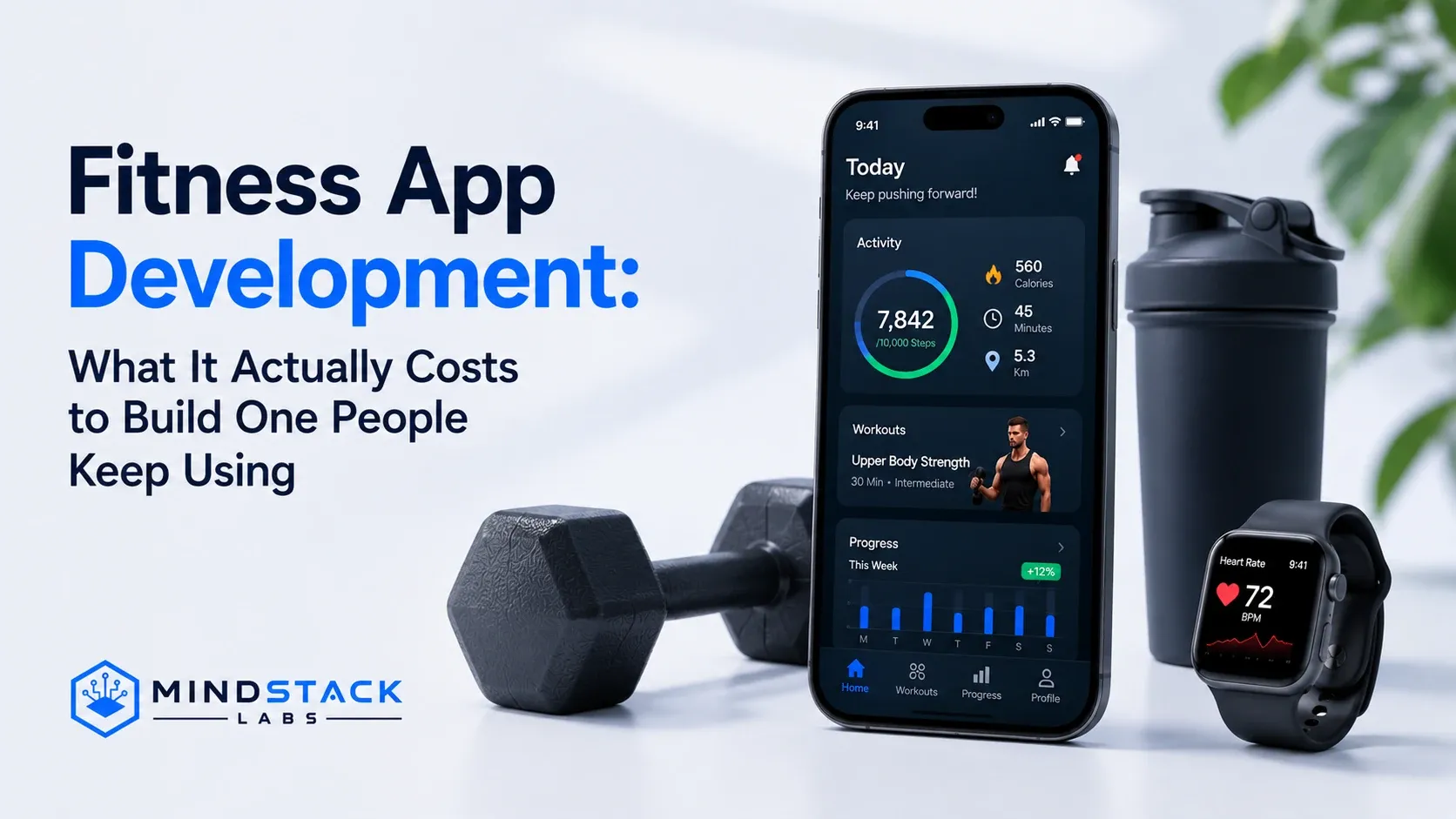
Fitness app development costs $25,000 to $45,000 for an MVP and $60,000 to $120,000 for a full platform in the US market.
Three things move that number: how many wearables you integrate, whether you stream video, and how many user roles your app supports.
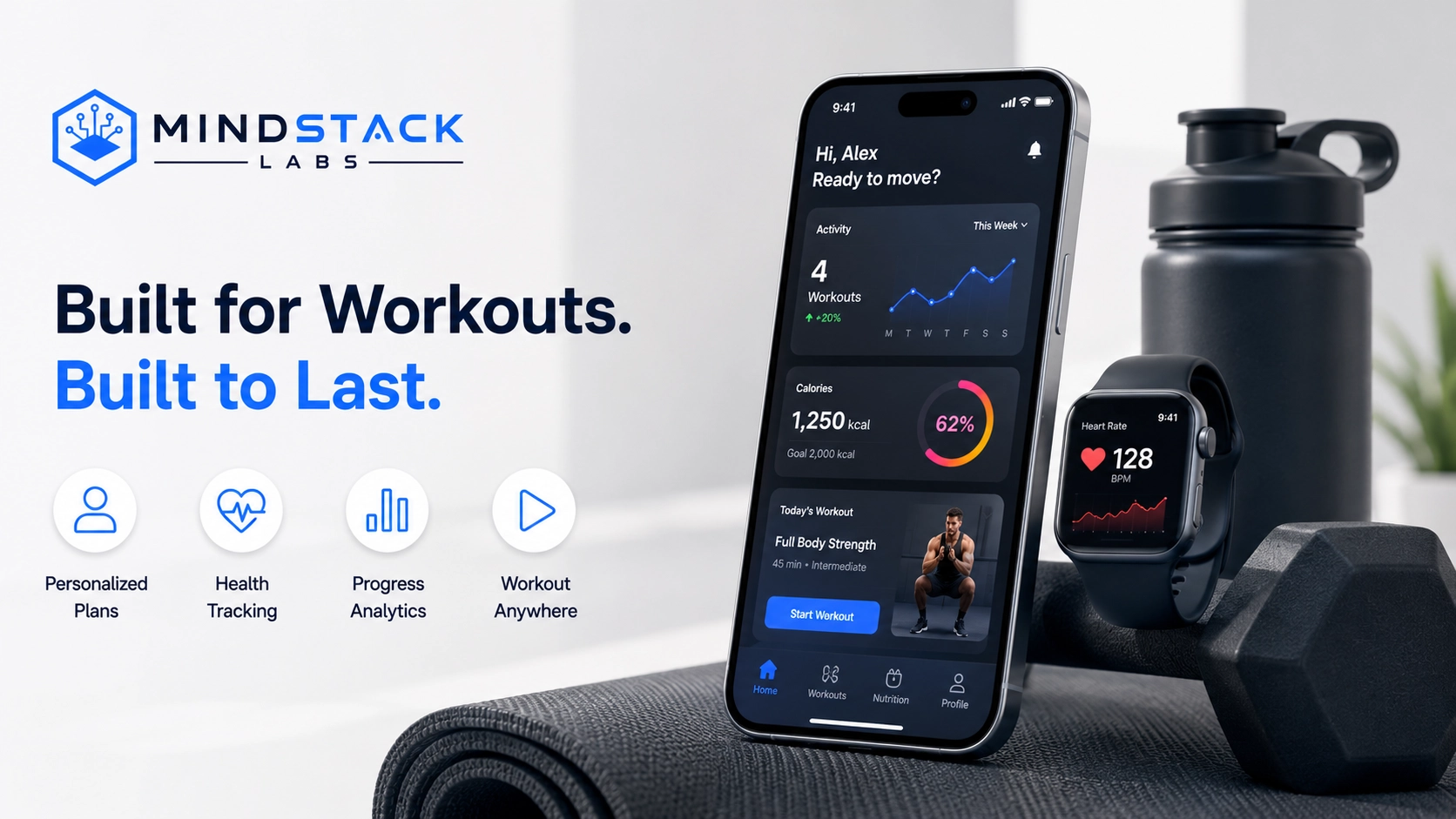
The part nobody quotes you on: retention.
- An app nobody opens on day 30 costs the same as one they use daily.
- Retention is set in the data model during week two, not in marketing during month six.
- So the real question is not "what does it cost." It is "what does it cost to build one that survives."
Ever seen a founder celebrate 10,000 downloads while day-30 retention sits at 4 percent?
Me neither. Here is the full breakdown.
TL;DR
| Question | Short answer |
|---|---|
| MVP cost and time | $25k to $45k, 6 to 10 weeks |
| Full platform cost and time | $60k to $120k, 12 to 16 weeks |
| Biggest cost driver | Number of user roles, not number of features |
| White-label or custom | Rent below $1,500 a month in platform fees. Build above it |
| Year two cost | 15 to 20 percent of build cost, annually |
| Do you need HIPAA | Usually no, unless providers or insurers are involved |
Fitness App Development Cost by Build Type
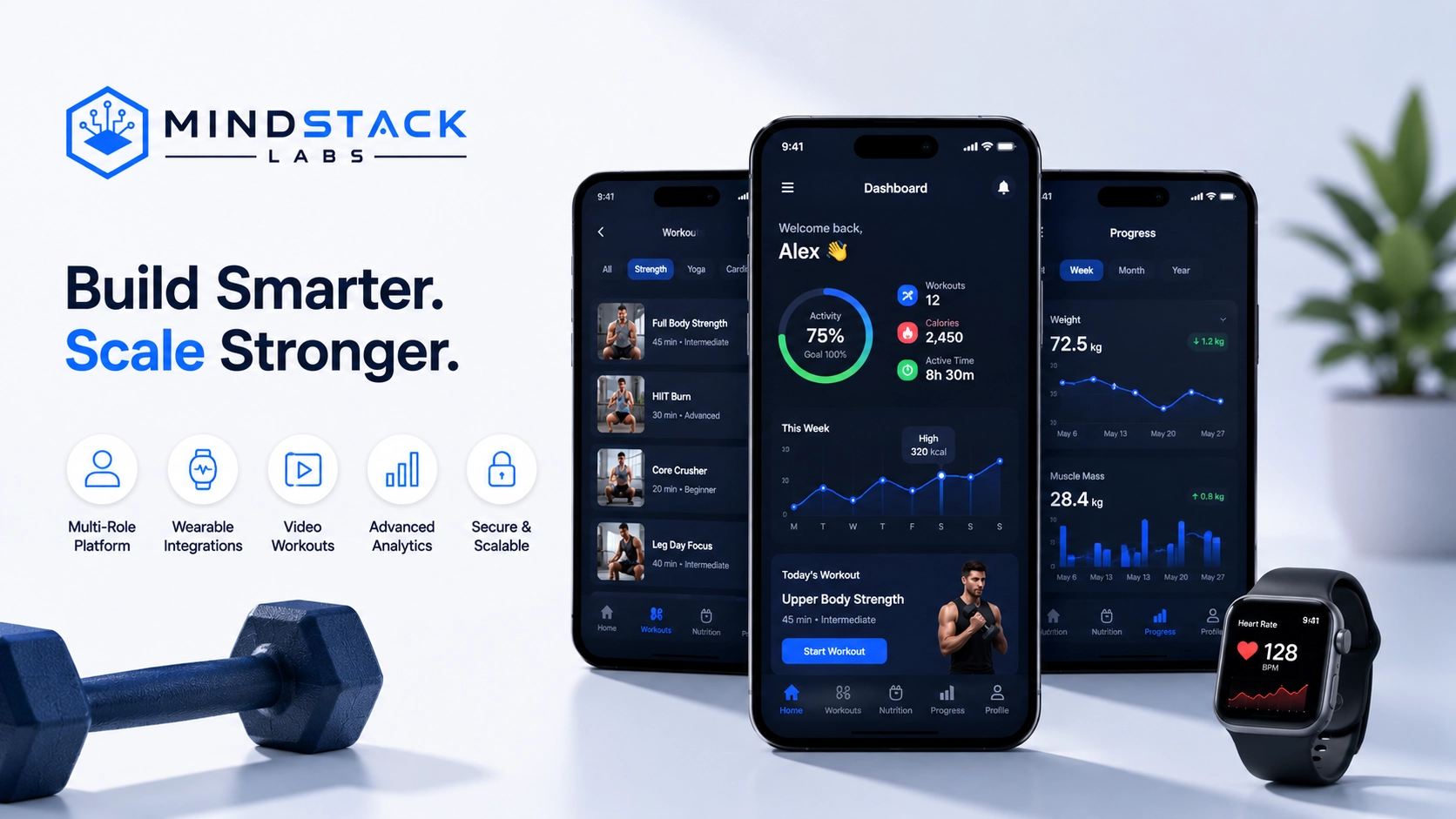
Three tiers cover almost every fitness build I have scoped. The tier you land in depends on user roles, not feature count.
| Build type | Timeline | What it includes | Typical range |
|---|---|---|---|
| Fitness MVP | 6 to 10 weeks | One core flow, auth, one wearable, subscription hook, basic analytics | $25k to $45k |
| Full platform | 12 to 16 weeks | Multi-role coaching, video, 2 to 4 integrations, custom paywall, admin panel | $60k to $120k |
| Growth add-ons | 2 to 6 weeks each | Extra wearables, community feed, advanced analytics, AI programming | $8k to $30k per module |
The spread inside each tier confuses people. It should not.
One variable explains most of it: user roles.
- Solo-user workout logger → one permission model
- Coaching platform with clients, trainers, and gym admins → three roles, plus every interaction between them
From my experience, that single decision moves a quote by 40 percent or more. Our fitness app development services page shows which tier each of our shipped builds fell into.
What drives the price up
- Integration count → each wearable platform = 1 to 2 engineering weeks, plus permanent SDK maintenance
- Video infrastructure → streaming library = encoding, CDN, offline caching, all recurring
- Multi-role permissions → every new role = exponential QA paths, not linear
- Offline mode → gym basements have no signal = local-first data architecture
- Custom analytics → progression math is domain logic, not a dashboard install
What people forget to budget
I have watched budgets blow up on the same four line items. None appear in a development quote.
| Forgotten cost | Why it hurts |
|---|---|
| Exercise content production | A 200-exercise video library is a production project, not a dev task |
| Food database licensing | Nutrition apps need verified food data. Recurring license, not one-time |
| App Store review cycles | Health apps get extra scrutiny. Costs calendar time, not money |
| SDK drift | HealthKit and Google Fit change yearly whether you touch the app or not |
Why Most Fitness Apps Lose Users, and What That Costs You
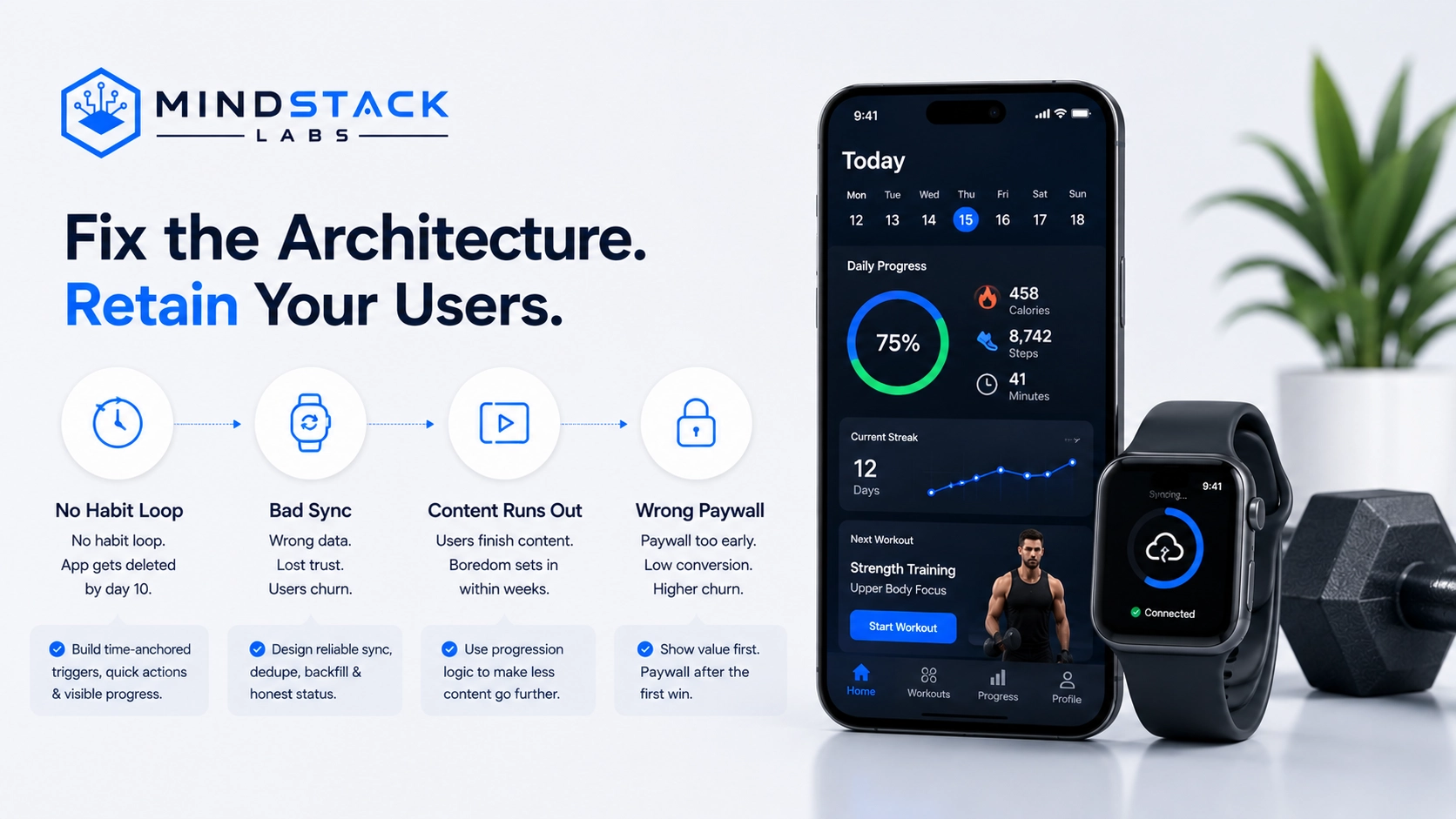
Retention failures are architecture failures. That is why they cost more to fix after launch than to prevent during the build.
In the builds I have worked on, every retention problem traced back to week two of development.
That is the part nobody prices.
1. No habit loop, so the app gets deleted
Apps without a designed habit loop die around day 10. No amount of push notification volume rescues them.
A working loop needs three things in the product:
- Time-anchored triggers tied to the user's real schedule, not a generic 7am blast
- A first action under 15 seconds
- Visible streak or progression feedback on the home screen, not buried in a stats tab
A calorie tracker I looked at had a 40-second logging flow. Users churned in week two. The flow was not broken. It was just too long to become a habit.
2. Wearable sync is unreliable
Bad sync is the fastest trust killer in fitness apps. A user who sees the wrong step count stops believing every number you show them.
Sync is not a checkbox. It is a reconciliation problem:
- Deduplicate when a phone and a watch both report steps
- Handle backfill when a device syncs three days late
- Show sync state honestly instead of pretending data is live
This is a database and data architecture problem before it is a UI problem.
3. Content runs out fast
Fixed content libraries plateau the moment users finish them, usually inside eight weeks.
- Static library of 400 exercises → still gets boring
- 60 exercises plus progression logic → feels infinite
Progression logic is cheaper than more content. Every time.
4. The subscription model kills the business model
Paywalls placed before the user feels progress convert badly, no matter how good the pricing page looks.
- Paywall before value → high install-to-uninstall
- Paywall after first visible win → higher intent, lower churn
- Annual-only pricing → fewer trials, harder recovery
I have seen the same app move conversion meaningfully just by shifting the paywall to after the third completed workout.
What Each Fitness App Type Costs, and Why
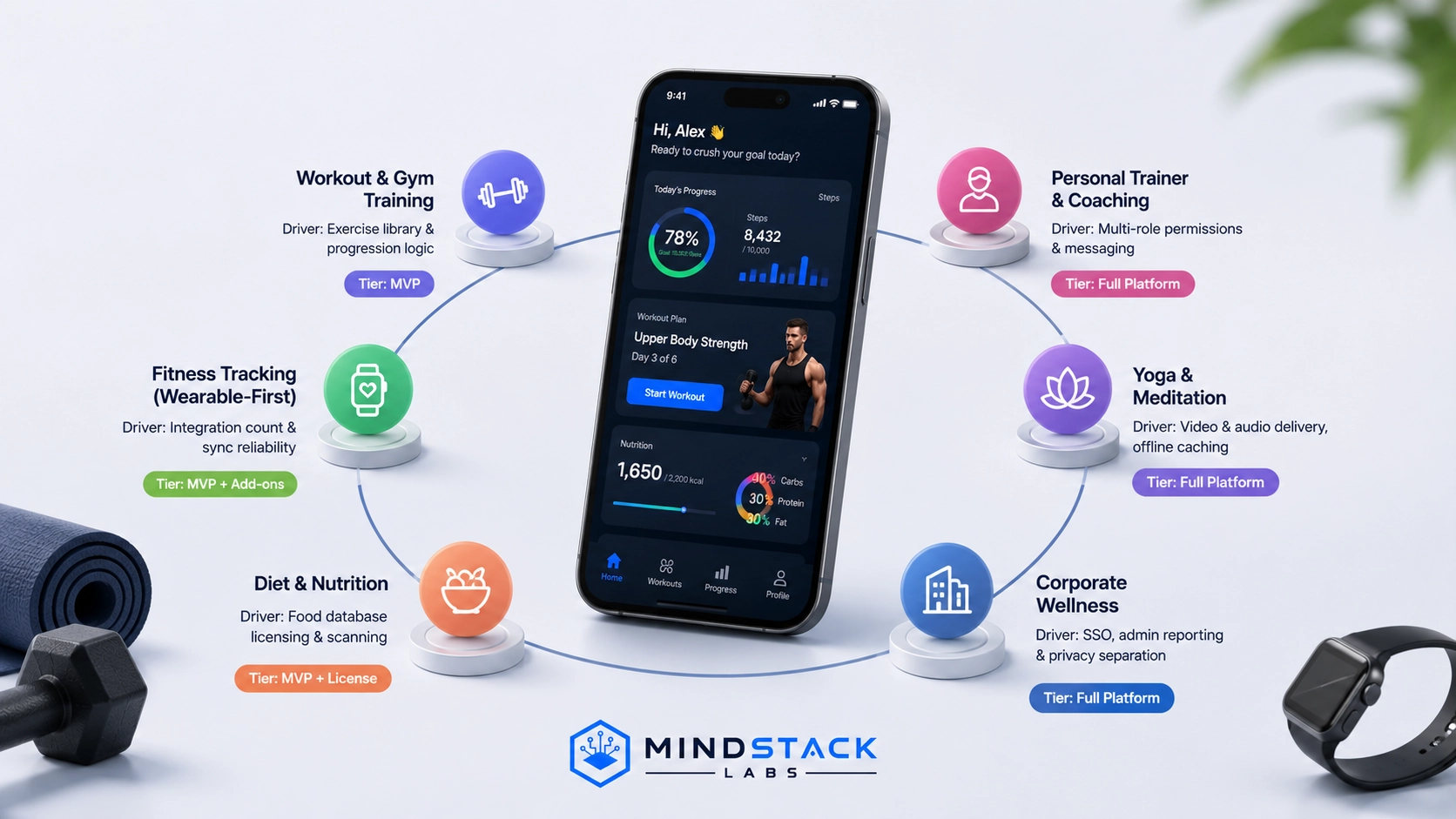
Every fitness app type has one dominant cost driver. Find yours and you know your tier.
| App type | Dominant cost driver | Typical tier |
|---|---|---|
| Workout and gym training | Exercise library and progression logic | MVP |
| Personal trainer and coaching | Multi-role permissions and messaging | Full platform |
| Fitness tracking, wearable-first | Integration count and sync reliability | MVP plus add-ons |
| Diet and nutrition | Food database licensing, barcode scanning | MVP plus license |
| Yoga and meditation | Video and audio delivery, offline caching | Full platform |
| Corporate wellness | SSO, admin reporting, privacy separation | Full platform |
Workout and personal trainer apps
Workout app development stays in MVP territory. Personal trainer app development almost never does.
The difference is roles:
- Workout app → serves one user
- Coaching app → client assignment, program templating, progress review, two-way messaging
That is four bullets on a feature list and roughly six extra weeks in reality.
Nutrition, yoga, and meditation apps
Diet and nutrition app development carries a recurring cost founders miss: the food database.
Yoga and meditation app development shifts spend from logic to delivery. Video and audio at scale means encoding, CDN, and offline downloads.
One meditation app I reviewed spent 60 percent of its infrastructure budget on video delivery. Nothing was wrong with it. It was just never in the original quote.
Wellness and fitness tracking apps
Corporate wellness app development adds requirements consumer apps never face.
- SSO against the employer's identity provider
- Aggregate reporting for HR, with no individual data exposed
- Strict privacy separation between employer and employee
Those reporting needs usually mean internal tooling and admin portals alongside the app itself.
Wait, you might be thinking: why not just use a white-label platform?
For many readers, you should. If you run one gym and need booking plus a branded member app, Trainerize or Glofox beats any custom build on cost and speed.
Custom wins at a specific crossover point.
| Factor | White-label | Custom build | In-house hire |
|---|---|---|---|
| Upfront cost | $100 to $500 a month | $25k to $120k | $130k+ loaded, per engineer, per year |
| Per-member fees | Yes, scales against you | None | None |
| Data ownership | Platform owns it | You own it | You own it |
| Feature ceiling | Platform roadmap | None | None |
| Time to launch | Days | 6 to 16 weeks | 3 to 6 months including hiring |
| Best for | Single location, unvalidated ideas | Validated demand, differentiated product | Long-term product org |
The crossover math
Run this before you talk to any vendor:
- Monthly platform fee plus per-member fees, times 24 months = your two-year rental cost
- Compare against fixed build cost plus annual maintenance
- → rental above build inside 24 months = custom is cheaper, and you own the asset
That crossover usually hits around $1,500 a month in platform fees. Below it, rent. Above it, build.
Already shipped a v1 that failed?
A rebuild is not always the answer. I have talked founders out of one more than once.
- Data model sound, churn is a habit-loop problem → targeted rework at 30 to 40 percent of a fresh build
- Data model cannot support progression tracking → rebuild
That second constraint does not negotiate.
Not sure which tier you are in?
Send us your feature list, get a scoped range back
We will map your features to a build tier, flag the two or three that belong in phase two, and give you a range. If white-label is the better answer for you, we will say so.
- Tier and timeline mapped to your feature list
- Wearable and integration scope called out separately
- No obligation, no sales sequence
Wearables, Integrations, and the Stack That Moves Your Budget
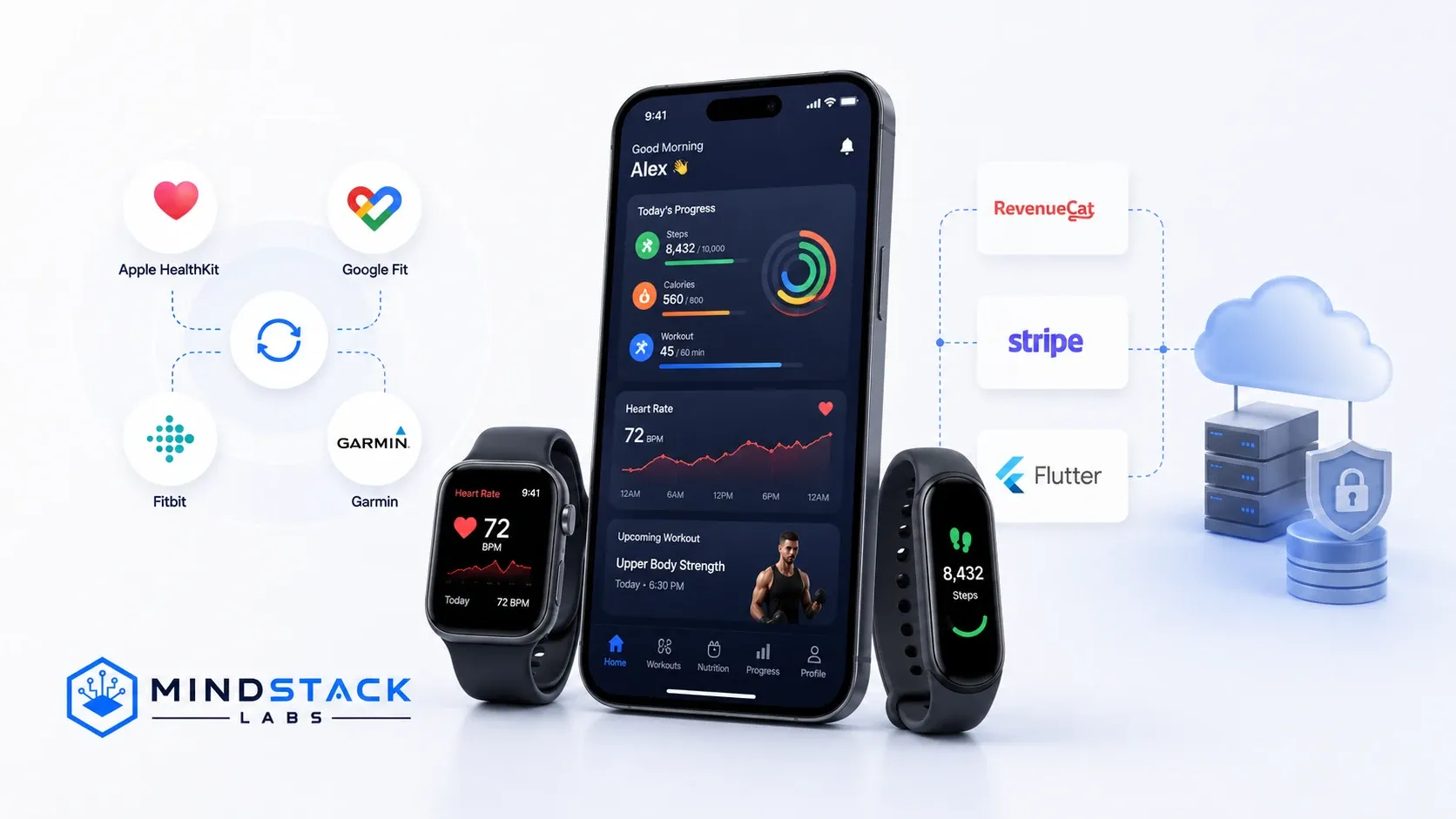
Integrations are where fitness budgets quietly double. On paper every platform returns step counts. In practice they disagree with each other.
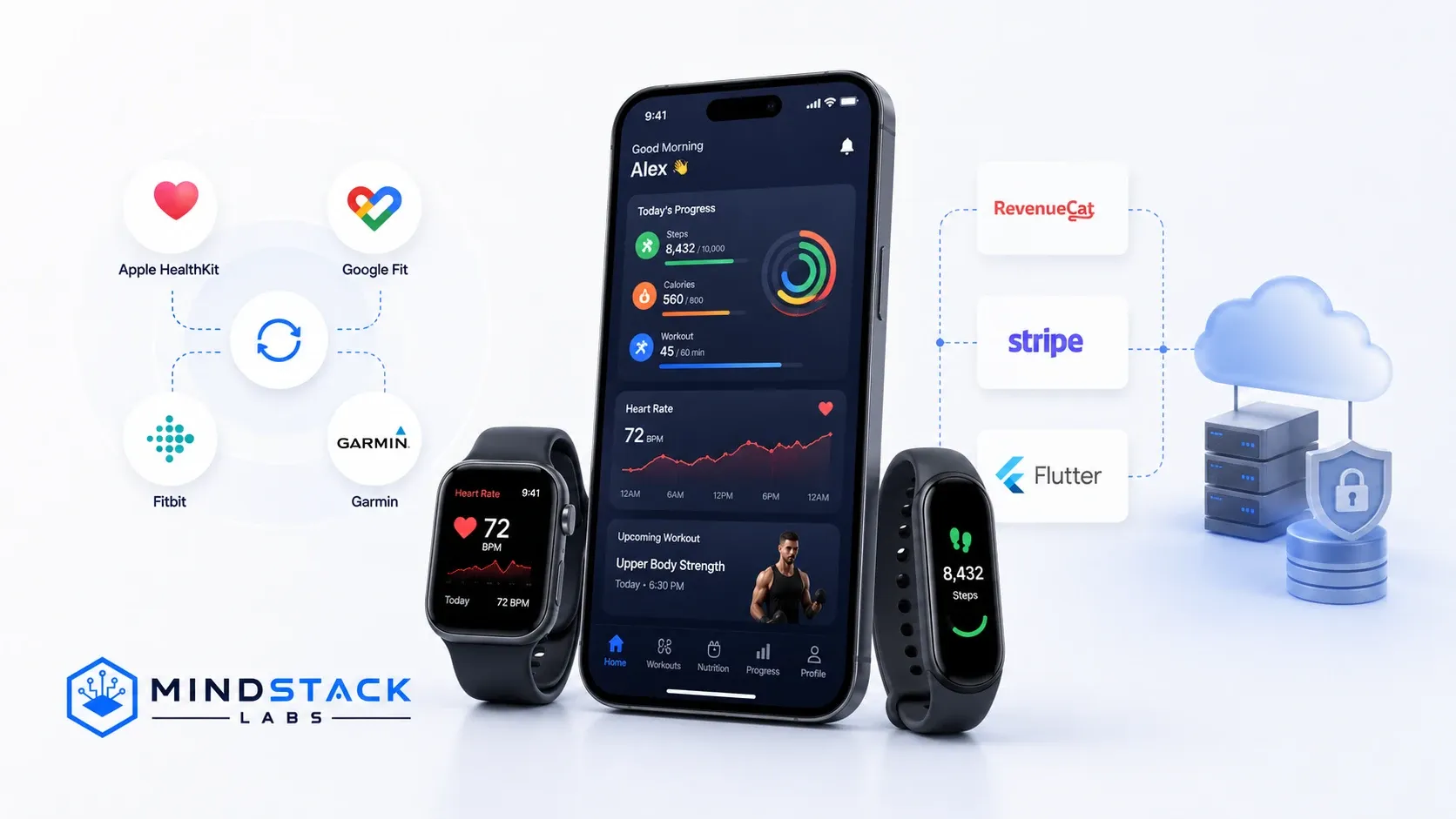
HealthKit, Google Fit, Fitbit, and Garmin
Each costs 1 to 2 engineering weeks plus permanent maintenance. You rarely need all four at launch.
| Platform | What to know |
|---|---|
| Apple HealthKit | Required for any serious iOS fitness app. Strict permission and data-use rules |
| Google Fit and Health Connect | The Android path, currently in transition. Pick carefully |
| Fitbit | Cloud API. Rate limits matter at scale |
| Garmin | Strong with endurance audiences. Heavier approval process |
Start with the one your users actually wear. Add the rest when support tickets tell you to.
Bluetooth LE device sync
Direct Bluetooth LE sync belongs in the add-on tier, never the MVP.
Heart rate straps, smart scales, and gym equipment each speak slightly different dialects of the same protocol.
Offline-first handling makes this survivable. We built and open-sourced a Flutter package for exactly this class of problem, storage_sync, which handles local and remote state reconciliation.
Subscriptions and billing
- Stripe → web checkout and coach-side billing
- RevenueCat → cross-platform app store subscriptions, entitlements, trial logic
We are an official RevenueCat technology partner, which is why we do not rebuild receipt validation twice per project.
Flutter or native for a fitness app?
Flutter works for the large majority of fitness apps. It stops making sense in one case: a companion app to proprietary hardware with deep firmware needs. Then go native.
Everything else, from workout logging to coaching to nutrition, ships faster on one codebase.
Our team works in Flutter daily and maintains open source packages for it, including toggle_switch, dart_extensions_pro, and a Twilio voice integration package that matters if you plan live coach calls. We are also a Google-certified Flutter tech consultant.
Backend side, most fitness builds run on a Node.js API layer with real-time sync.
Timeline: What You Can Actually Launch and When
A fitness MVP ships in 6 to 10 weeks when scope holds. The phase that gets cut first is the one protecting retention.
| Phase | Duration | What happens |
|---|---|---|
| Discovery and retention mapping | Week 1 to 2 | Habit loop design, wearable decision, paywall placement |
| Build sprints | Week 3 to 8 | Core flow, integration, subscription, analytics instrumentation |
| Retention QA | Week 8 to 9 | Sync reliability under real conditions, notification logic testing |
| Launch and support | Week 10 onward | Store submission, monitoring, 30-day post-launch window |
Notice where retention QA sits. Before launch, not after.
One calendar warning: health apps draw longer store review. Add two weeks of buffer for a January launch, because everyone else is targeting it too.
Data, Privacy, and Compliance for Fitness Apps
Most consumer fitness apps do not need HIPAA compliance. Vendors who tell you otherwise are either confused or selling fear.
HIPAA applies to covered entities and their business associates: providers, health plans, clearinghouses, and vendors handling protected health information for them.
A direct-to-consumer workout app usually sits outside that.
When HIPAA does apply to you
- You integrate with a provider, clinic, or hospital system
- An employer health plan or insurer is your customer and health data flows to them
- You handle clinical or treatment data, not self-reported fitness data
If any of those fit, get legal review. If none do, you still have real obligations.
What applies to everyone
| Rule | What it means for your build |
|---|---|
| HealthKit and Google Fit data-use rules | Health data cannot be sold or used for advertising. Enforced at review |
| GDPR, if you have EU users | Health data is a special category. Consent and deletion flows need real implementation |
| Store health data policies | Vague permission strings and health data in analytics payloads are top rejection triggers |
We treat this as engineering practice, not a certificate: encryption in transit and at rest, permission minimization, and no health data in third-party analytics.
We have written more on the underlying approach in our API security checklist and on how modern applications protect user data.
What Year Two Costs
Budget 15 to 20 percent of your build cost per year for maintenance. Treat it as non-optional.
Fitness apps carry more forced maintenance than most categories, because the platforms underneath keep moving:
- Annual OS releases, each touching health permissions
- Wearable SDK updates outside your control
- Store policy changes for health data
- Subscription and pricing infrastructure updates
Skip it and your app breaks on schedule, roughly every September.
Why Choose Mindstack Labs for Fitness App Development?
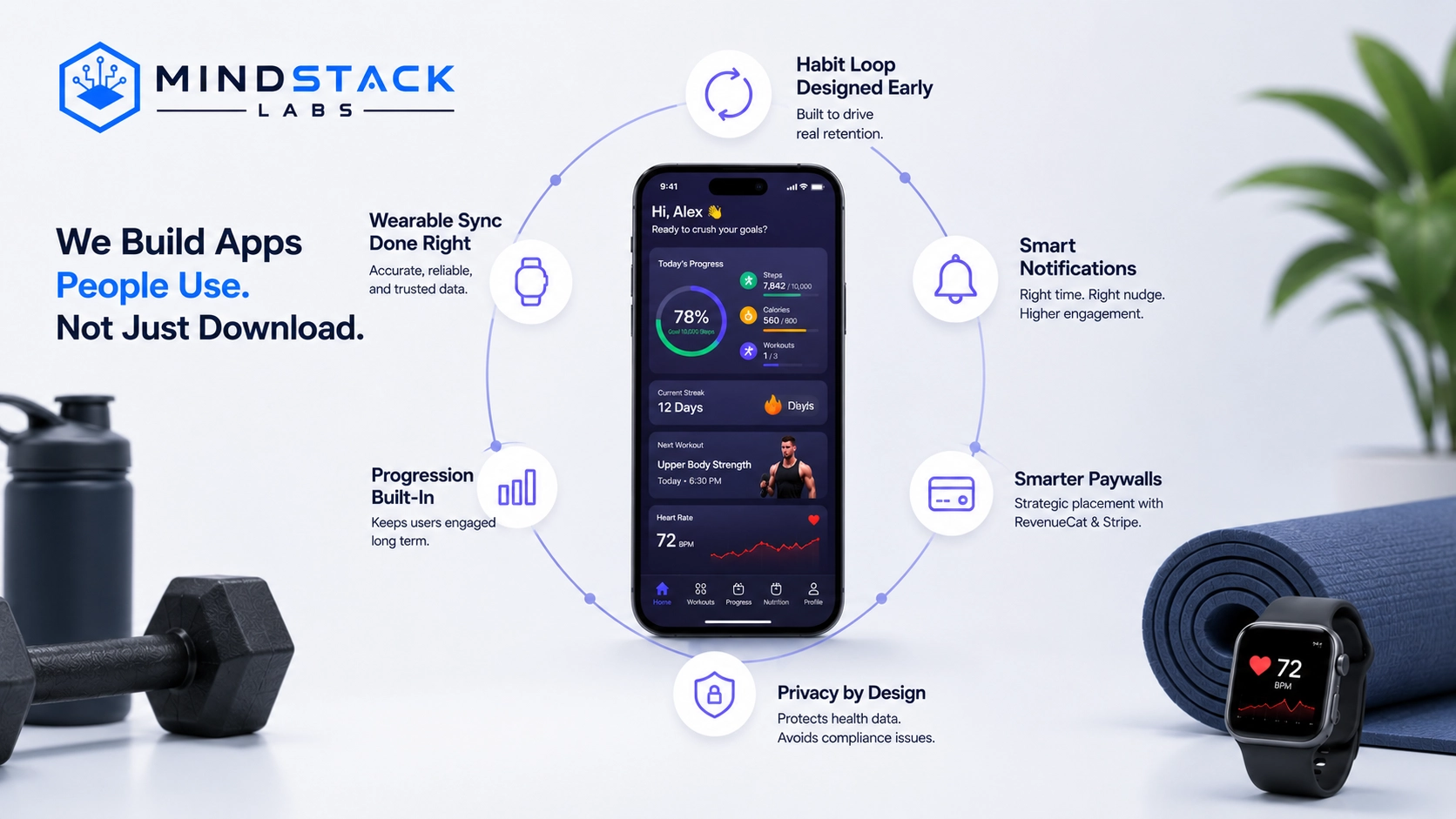
We build fitness apps around retention from day one instead of patching engagement after launch. That changes what we scope first.
| What we do differently | What it prevents |
|---|---|
| Habit loop designed in discovery, before code | Day-10 deletion |
| Wearable sync treated as reconciliation, with dedupe and backfill | Users distrusting every number |
| Progression tracking in the core data model | Content plateau at week eight |
| Notification timing designed against the loop | Users muting the app |
| Paywall scoped with the product, on RevenueCat and Stripe | Onboarding-stage churn |
| Health data privacy by design | Store rejections and rework |
Where we are not the right fit
We will point you elsewhere if:
- You run a single-location gym and mainly need booking → use white-label
- Your idea is unvalidated → test cheaply first, then build
- You need firmware for proprietary hardware → hire a native and embedded team
We would rather lose the project than ship you the wrong one.
Why Trust Mindstack Labs for Fitness App Development?
We have shipped since 2019, with 250+ projects delivered and nine-plus fitness and wellness builds. That last number matters most, because wearable sync experience only comes from fitness-specific delivery.
| Signal | Detail |
|---|---|
| Operating since | 2019 |
| Projects delivered | 250+ |
| Engineering team | 50+ |
| Fitness and wellness builds | 9+ |
| Client rating | 5.0 on Clutch, plus verified reviews on Trustpilot, GoodFirms, DesignRush |
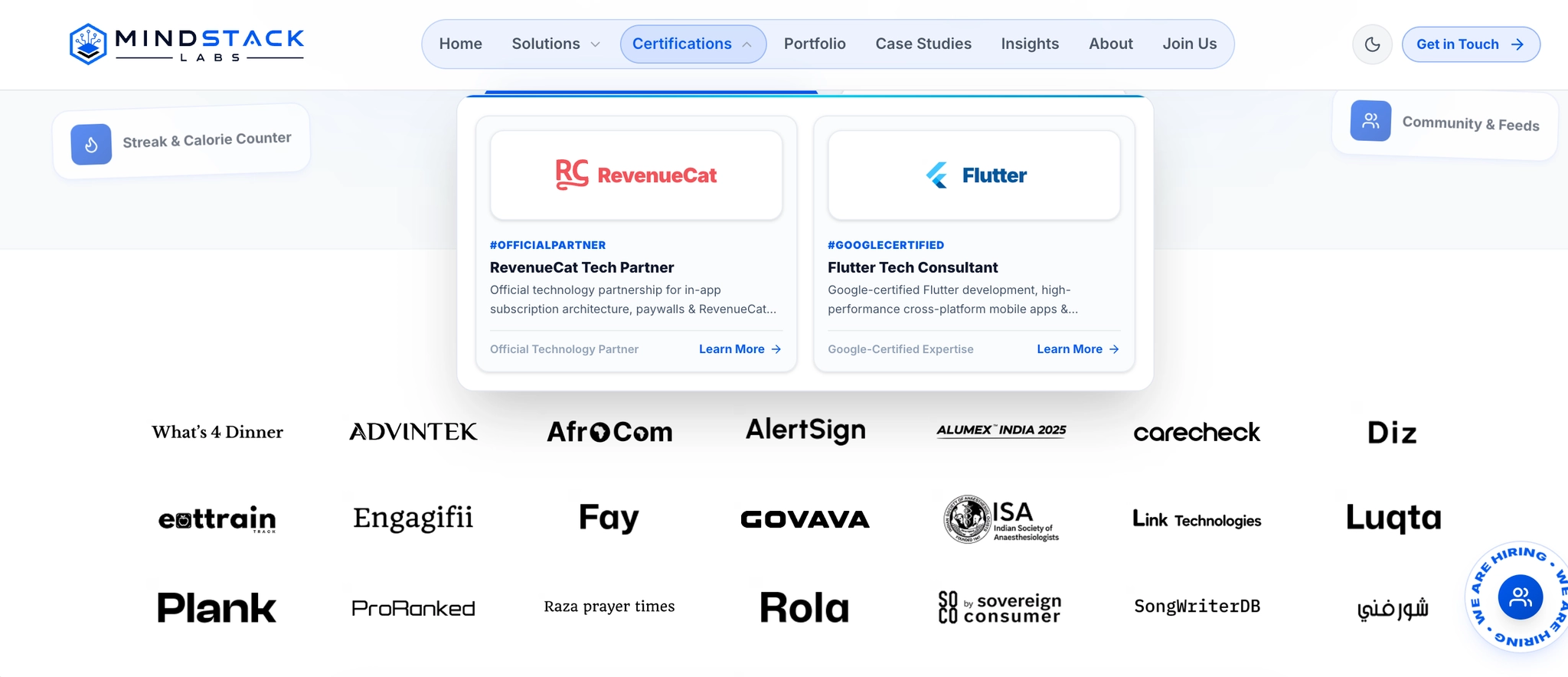
| Partnerships | Google-certified Flutter tech consultant, RevenueCat technology partner |
| Post-launch support | 30 days included |
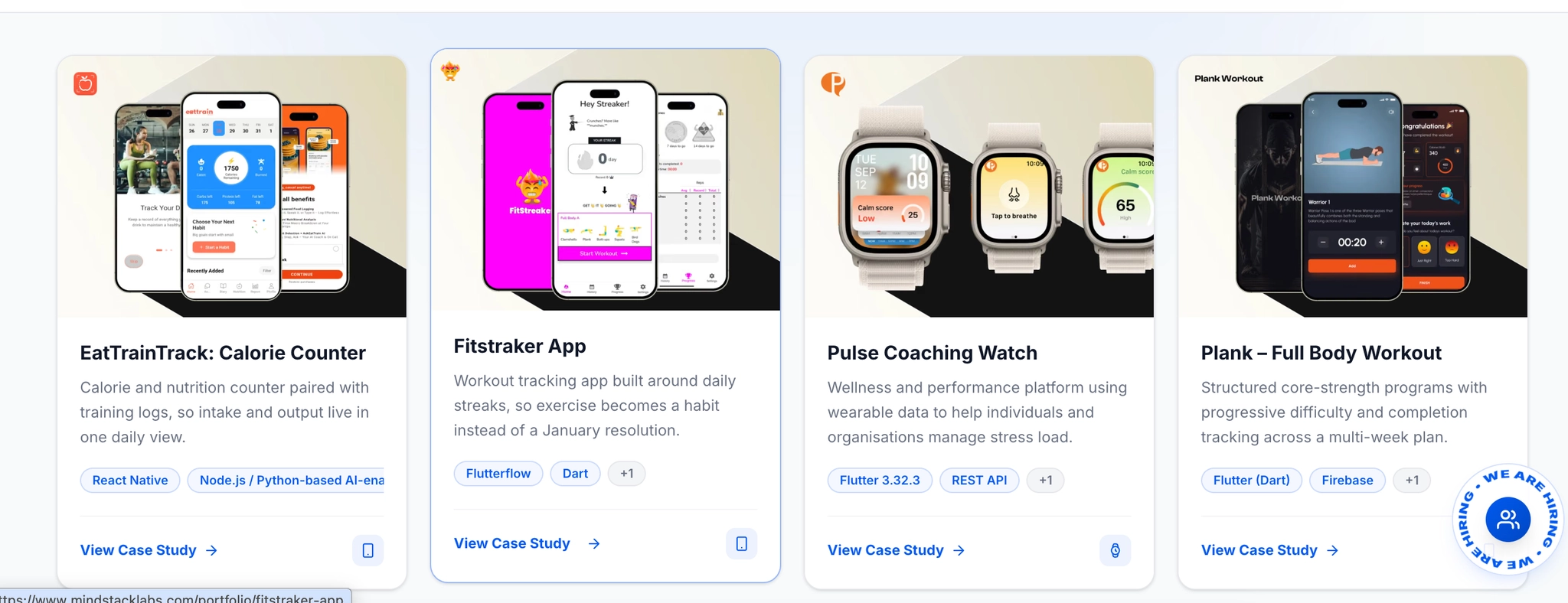
Fitness builds we have shipped include a calorie counting and food tracking app, a fitness coaching platform, a wearable-connected pulse coaching build, and a full-body workout app.
- See the flows on our fitness app development page
- Browse the wider portfolio and case studies
The 30-day support window answers the objection every founder carries in: who maintains this after launch.
How to Evaluate Any Fitness App Development Company
The best fitness app development company for you asks about retention before it asks about features. You can test for that in one call.
Eight questions to ask on the first call
- Which wearables have you actually integrated, and what broke?
- Show me retention numbers from a fitness app you shipped.
- Who owns the code and the repository?
- How do you handle duplicate data from a phone and a watch?
- Where would you place the paywall in my app, and why?
- What is your annual maintenance cost, in writing?
- What would you cut from my feature list to hit a 10-week launch?
- Which parts of this project are you not the right team for?
Question eight is the most useful. Anyone who says "nothing" has not read your requirements.
Red flags and green flags
| Red flag | Green flag |
|---|---|
| Quote arrives without a scope document | Asks about retention strategy before feature list |
| No named fitness projects, only a logo wall | Volunteers where they are not a fit |
| Wearable integration treated as a checkbox | Names specific SDKs and versions |
| Refuses to discuss cost bands | Prices maintenance up front |
| Claims a compliance certification without naming the auditor | Describes compliance as practice, not credential |
Offshore, domestic, or somewhere between?
Location matters less than fitness domain experience.
A domestic team that has never shipped wearable sync will cost you more in rework than an offshore team with nine fitness builds behind it.
Ask for the fitness portfolio. Then check the apps are still live.
Frequently Asked Questions
1. How much does it cost to develop a fitness app?
Most fitness apps cost $25,000 to $45,000 for an MVP and $60,000 to $120,000 for a full platform in the US market. Integration count, video delivery, and number of user roles drive nearly all the variation.
2. How long does it take to build a fitness app?
A focused MVP ships in 6 to 10 weeks. A full coaching or wellness platform takes 12 to 16 weeks. Add two weeks of buffer for store review, since health apps get extra scrutiny.
3. Should I build a custom fitness app or use a white-label platform?
Rent white-label if you run a single location or have not validated demand. Build custom once platform and per-member fees pass roughly $1,500 a month, or when you need to own your data and roadmap.
4. Do I need HIPAA compliance for a fitness app?
Usually no. Consumer fitness apps generally sit outside HIPAA unless you integrate with providers, insurers, or employer health plans. You still must follow HealthKit and Google Fit data-use rules, plus GDPR for EU users.
5. How much does wearable integration add to the cost?
Budget 1 to 2 engineering weeks per platform, plus ongoing maintenance as SDKs change. Direct Bluetooth LE device sync costs more than app-to-app integrations and belongs in a post-MVP phase.
Getting Your Fitness App Scoped
Decide your tier before you finalize your feature list. That reframe saves founders more money than any negotiation.
- Founders → MVP, one wearable, paywall after first win
- Coaches scaling past 1:1 → multi-role, so plan for the full platform tier
- Gyms and franchises → run the crossover math before committing either way
Ready to scope it properly?
Book a free 30-minute scoping call
Bring your feature list and your launch date. We will tell you what fits the window, what to defer, and what it costs. Honest answers, including when a platform beats a build.
- Retention plan mapped before any code estimate
- Wearable and integration scope priced separately
- Maintenance quoted up front, in writing