There was a time when writing code felt like craftsmanship, defined largely by how quickly you could type, remember syntax, and piece together framework APIs. Developers spent hours configuring build pipelines, hunting down missing semicolons, and copying boilerplate code from Stack Overflow.
Then AI coding assistants—and, more recently, autonomous AI agents—began taking over much of the routine work.
Today, AI systems can analyse complex codebases, refactor legacy microservices, generate comprehensive test suites, and open optimised pull requests in a fraction of the time it takes a senior developer to set up a local development environment.
When AI handles much of the execution, what defines a world-class software team in 2026?
Software engineering hasn't lost its core purpose—it has evolved. The focus has shifted from writing code line by line to governing systems, understanding domain logic, and designing scalable architectures.
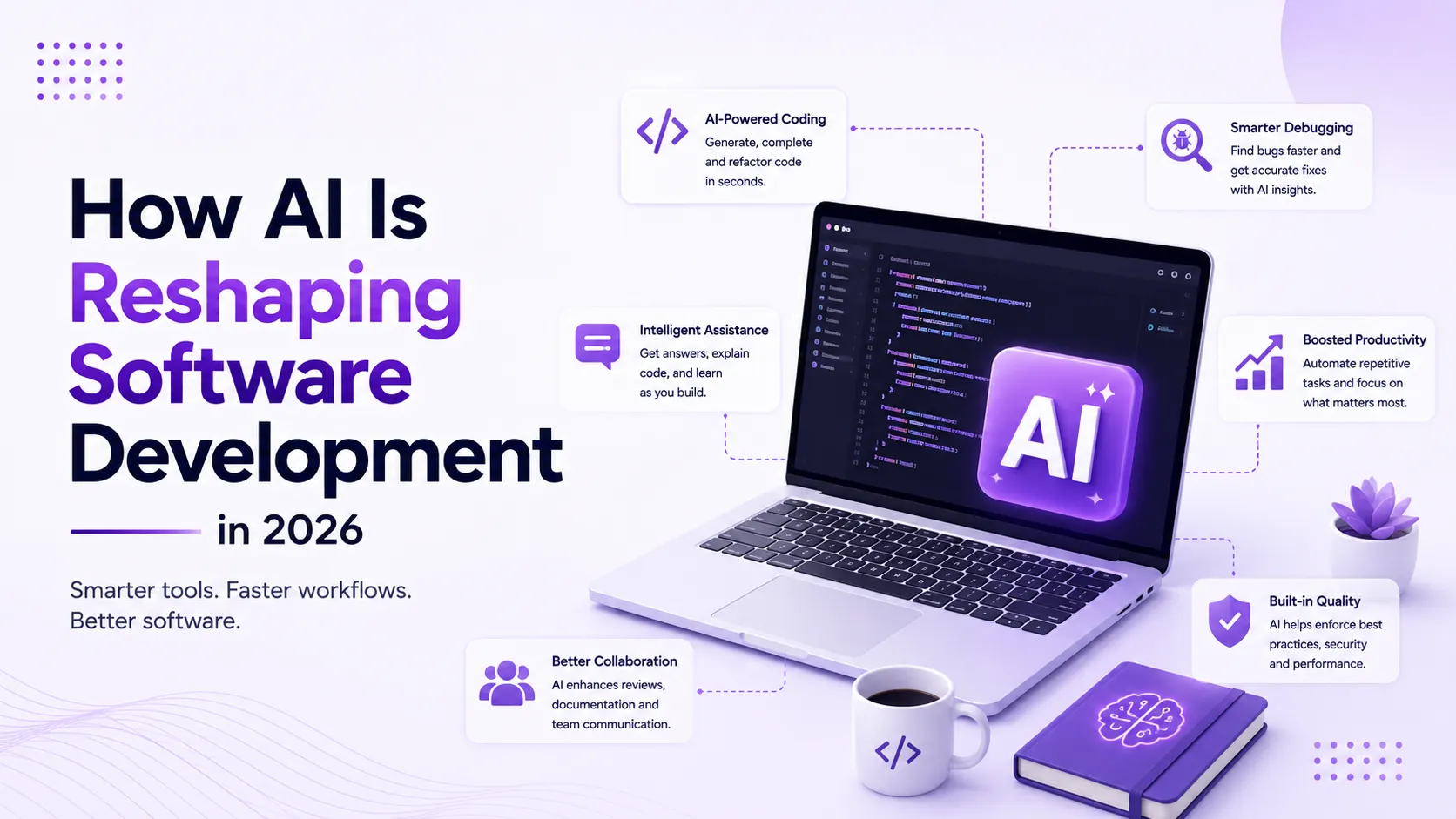
Let's explore how AI is reshaping software development in 2026.
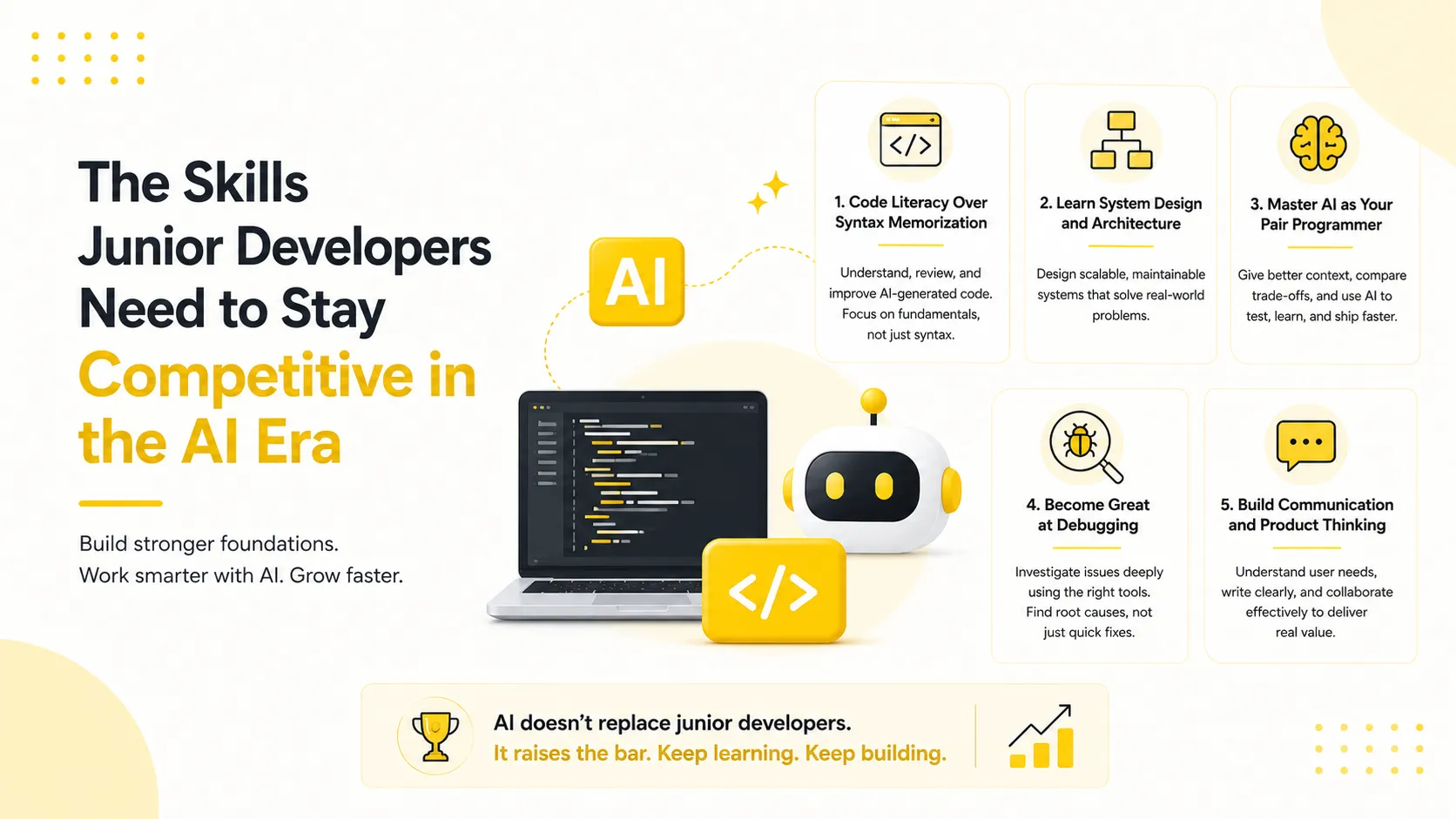
1. From Code Syntax to System Auditing
AI can generate syntactically correct code at incredible speed, but experienced engineers know that readable code isn't always reliable code.
The role of developers has evolved from writing every line manually to auditing, validating, and improving AI-generated implementations.
What Matters Now
- Concurrency and parallelism
- Memory allocation and garbage collection
- Networking protocols
- Distributed systems
- State management
- Security best practices
Treat AI-generated code like any pull request. Validate edge cases, security vulnerabilities, resource usage, and performance before merging.
2. Autonomous Workflows Replace Simple Autocomplete
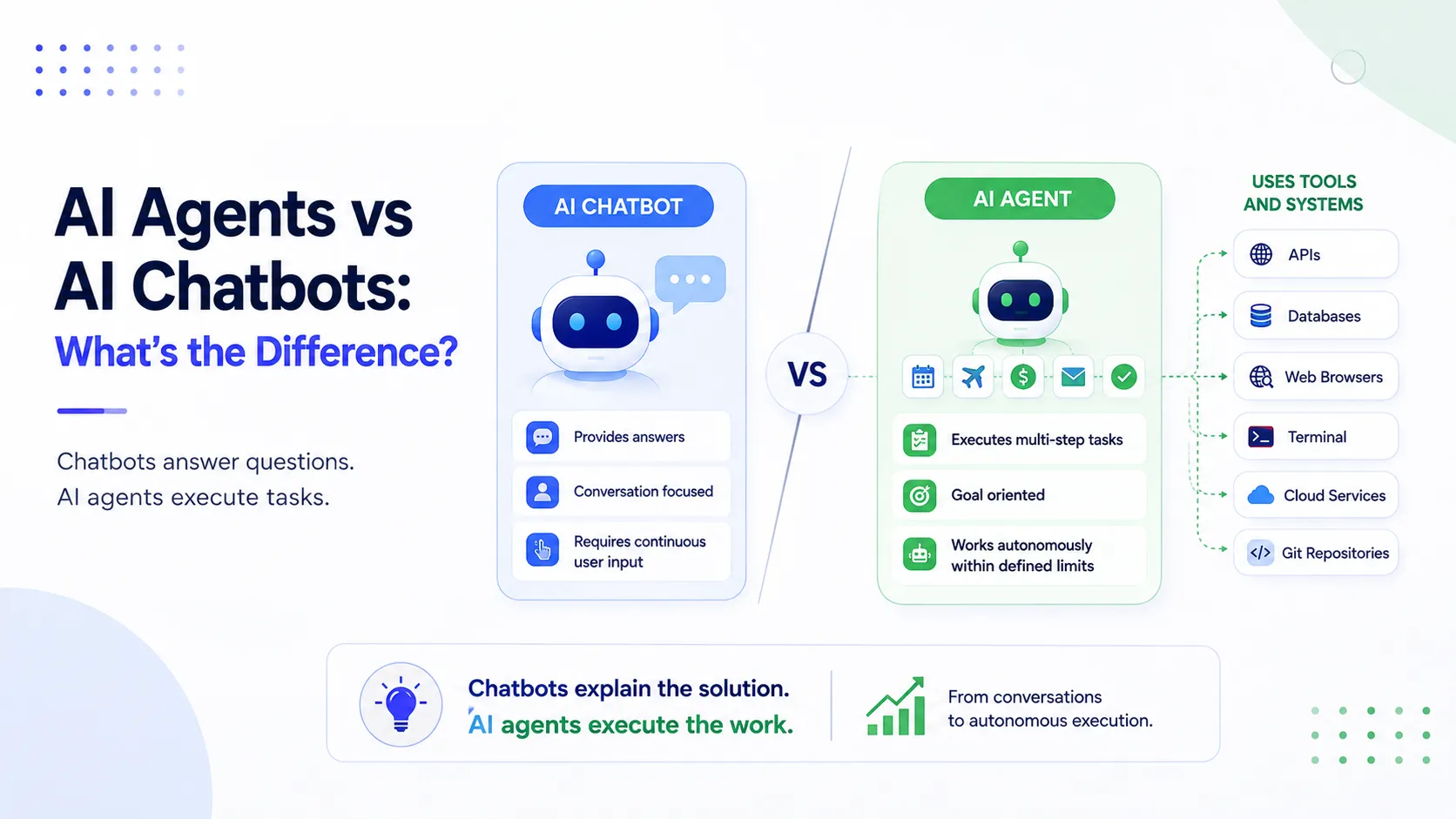
Modern AI tools have evolved beyond code completion. Autonomous agents can now complete multi-step engineering workflows with minimal supervision.
Developers define objectives and constraints while AI executes repetitive implementation tasks.
Provide Rich Context
- Architecture diagrams
- Database schemas
- Application logs
- Performance requirements
- Business rules
Better context consistently produces higher-quality AI outputs.
Automated Refactoring
AI can now upgrade frameworks, migrate legacy projects, modernize architectures, generate documentation, and perform large-scale code transformations while engineers review the final implementation.
3. Debugging Distributed Systems Still Requires Engineers
Production incidents involving race conditions, memory leaks, distributed transactions, and network latency continue to require human investigation.
Strong debugging skills remain one of the clearest indicators of engineering expertise.
- Stack trace analysis
- Performance profiling
- Memory debugging
- Distributed tracing
- Root cause analysis
AI can accelerate investigation, but engineers remain responsible for validating findings and implementing reliable fixes.
4. Product Thinking and Business Alignment
AI doesn't communicate with stakeholders, prioritize features, or balance technical debt against business value.
Great software engineers understand why features exist—not just how to build them.
Focus on Business Outcomes
- Customer problems
- User experience
- Technical trade-offs
- Business impact
- Long-term maintainability
Technical communication, documentation, architecture discussions, and decision-making remain uniquely human strengths.
5. Engineering in the AI Era
| Traditional Development | AI-Assisted Development (2026) |
|---|---|
| Writing CRUD APIs | Designing scalable API contracts |
| Building database models | Planning schemas and indexing strategies |
| Writing repetitive tests | Creating comprehensive automated testing strategies |
| Manual debugging | Using AI diagnostics with human validation |
| Refactoring boilerplate | Reviewing architecture and system quality |
The role of engineers is increasingly centered around architecture, validation, governance, and strategic decision-making rather than repetitive implementation.
Conclusion
AI hasn't replaced software engineering—it has transformed it.
The developers who continue to grow are those who embrace AI as a productivity multiplier while strengthening their understanding of software architecture, debugging, distributed systems, and business strategy.
In 2026 and beyond, the most valuable engineers won't simply write code faster—they'll design better systems, make better technical decisions, and combine AI with sound engineering judgment to build reliable software.