A decade ago, businesses across every industry were racing to embrace digital transformation. Companies that once viewed software as a support function quickly realized that technology had become central to their success.
Fast forward to 2026, and a similar transformation is unfolding—this time driven by artificial intelligence.
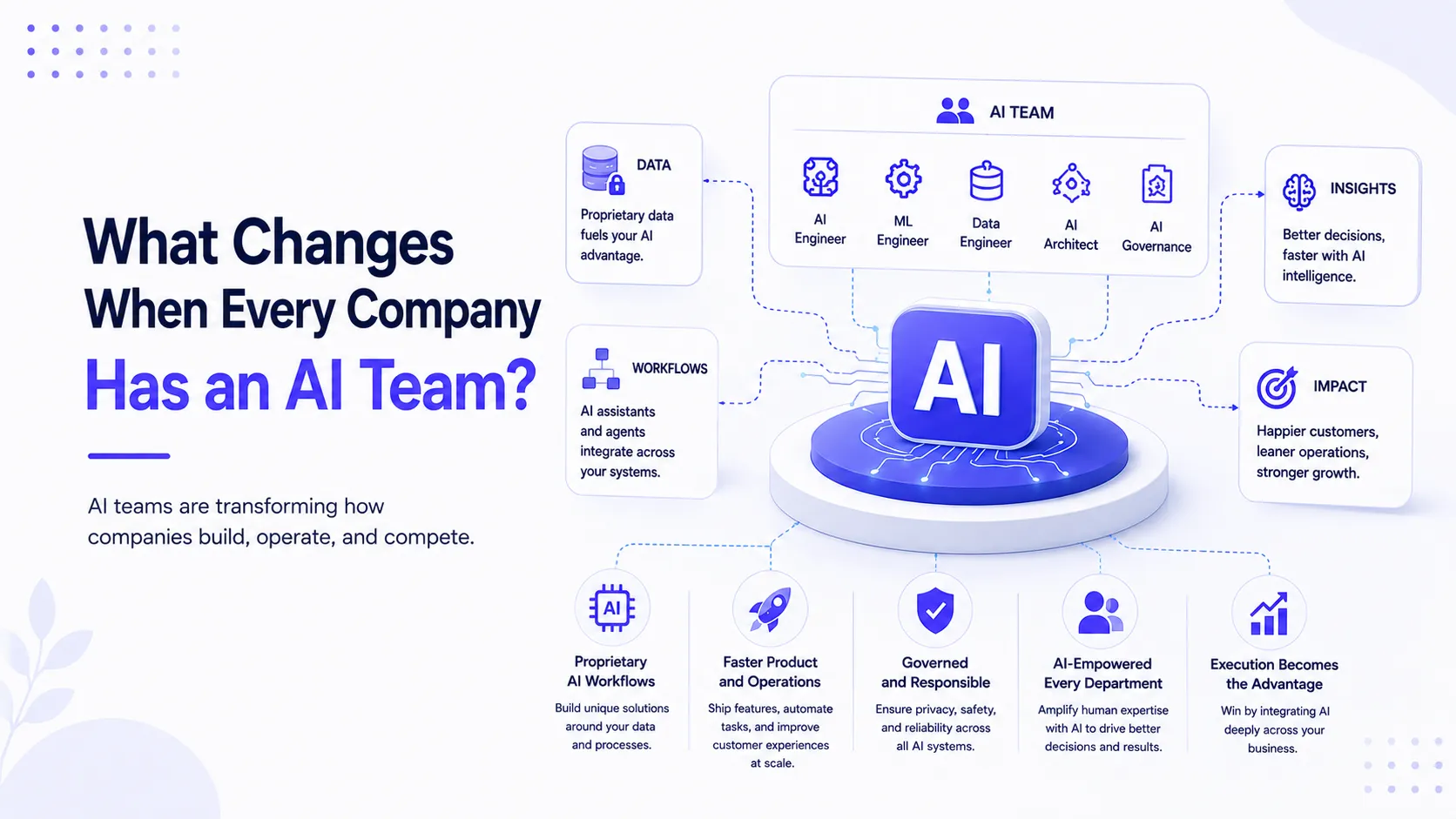
Organizations are no longer just purchasing AI-powered SaaS products. They're building dedicated AI teams made up of AI engineers, machine learning specialists, prompt engineers, data engineers, AI architects, and AI governance experts.
As AI becomes a core business capability, an important question emerges:
What changes when every company has an AI team?
The answer extends far beyond automation. It reshapes software development, business operations, customer experience, governance, and competitive strategy.
1. From Buying Software to Building Proprietary AI Workflows
For years, businesses solved operational problems by purchasing SaaS platforms.
Need a CRM? Buy Salesforce.
Need documentation? Use Notion or Confluence.
Need customer support? Subscribe to Zendesk.
As internal AI capabilities mature, companies increasingly build AI-powered workflows around their own proprietary processes instead of adapting to generic software.
Proprietary Data Becomes a Competitive Advantage
Customer conversations, internal documentation, operational knowledge, historical decisions, and enterprise data become valuable assets that power customized AI systems unavailable to competitors.
The Rise of Internal AI Platforms
Instead of relying on dozens of disconnected SaaS tools, organizations are creating AI assistants and autonomous agents that integrate directly with their internal systems and workflows.
2. Product Velocity Becomes the New Standard
When every engineering team has AI assistance, shipping software faster is no longer a competitive advantage—it becomes the baseline expectation.
AI accelerates:
- Feature development
- Code generation
- Testing
- Documentation
- Code reviews
- Deployment automation
Marketing Operations
AI teams enable marketing departments to generate localized campaigns, personalized content, and performance variations in hours rather than weeks.
Customer Support
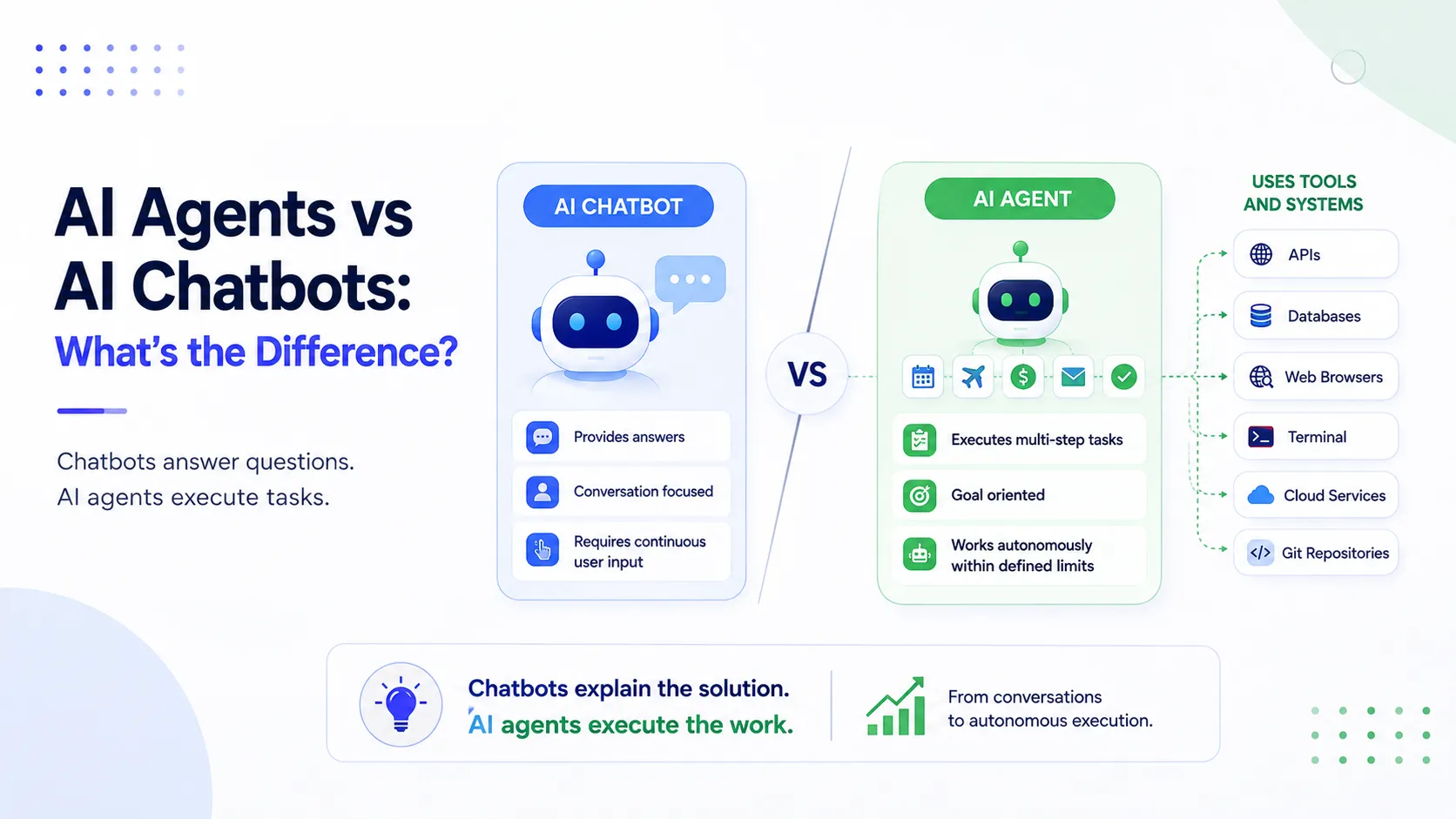
Modern AI agents go beyond answering FAQs. They can:
- Access customer accounts
- Check inventory
- Process refunds
- Execute multi-step workflows
- Escalate complex issues when necessary
Legal and Compliance
AI systems can analyze contracts, identify policy violations, detect legal risks, and accelerate compliance reviews while legal professionals validate critical decisions.
3. AI Governance Becomes a Core Engineering Discipline
As AI systems become responsible for mission-critical business operations, governance becomes just as important as model performance.
Data Privacy and Security
Organizations must prevent sensitive customer information, intellectual property, and confidential business data from leaking into public AI systems.
Model Evaluation
Enterprise AI pipelines require continuous evaluation to detect:
- Hallucinations
- Bias
- Incorrect reasoning
- Security vulnerabilities
- Unsafe outputs
Avoiding Vendor Lock-in
Leading organizations build abstraction layers that allow them to switch between foundation models without rewriting their entire AI infrastructure.
4. Every Department Becomes AI-Enabled
AI teams don't replace non-technical employees—they amplify their expertise.
Professionals across marketing, HR, finance, operations, sales, and customer success increasingly become domain experts responsible for teaching AI systems how the business operates.
Their responsibilities include:
- Defining workflows
- Providing business context
- Reviewing AI outputs
- Identifying edge cases
- Creating operational guardrails
The AI team provides the technology. Domain experts provide the business intelligence.
5. Competitive Advantage Shifts from AI Adoption to AI Execution
Eventually, every company will have access to similar AI models and technologies.
Success will no longer depend on simply using AI—it will depend on how effectively organizations integrate AI into every business function.
| Traditional Organization | AI-Driven Organization |
|---|---|
| Purchases SaaS tools | Builds proprietary AI workflows |
| Manual business processes | AI-assisted automation |
| Periodic optimization | Continuous AI-driven improvement |
| Department silos | Connected AI-powered operations |
| Slow product delivery | Rapid experimentation and iteration |
The organizations that succeed will use AI to launch products faster, improve customer experiences, optimize operations, and unlock entirely new business models.
Conclusion
We're entering a new era where AI teams become as common as software engineering, IT, or human resources departments.
The companies that thrive won't simply deploy AI tools—they'll build secure, governed, and deeply integrated AI ecosystems that enhance every aspect of the business.
Ultimately, competitive advantage won't come from having AI. It will come from combining AI technology with skilled people, efficient processes, and strong business strategy to solve meaningful problems at scale.