There was a time, not too long ago, when breaking into software engineering followed a fairly predictable path.
You learned HTML, CSS, JavaScript, and perhaps a backend language like Python or Node.js. You built a few CRUD applications, created a polished portfolio website, solved a handful of easy LeetCode problems, and started applying for junior developer roles.
If you could build a functioning web application and write clean, maintainable code, you had a strong chance of landing an entry-level position.
Then AI tools like GitHub Copilot, ChatGPT, Claude, and Cursor arrived.
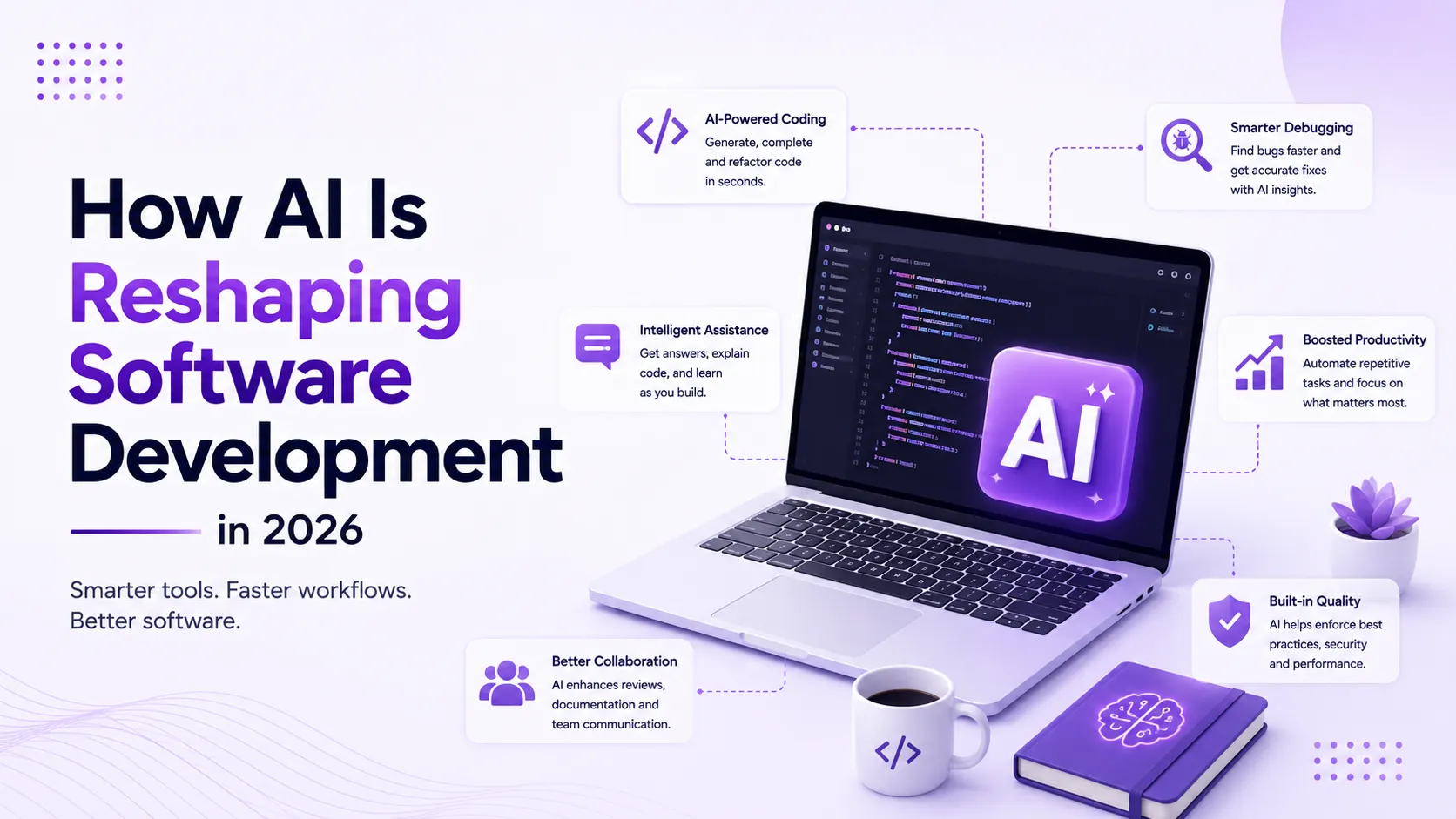
Today, AI can generate a standard React component in seconds, write boilerplate SQL queries instantly, explain obscure syntax errors, and even suggest architectural improvements.
If AI can write basic code faster than I can, what is my value as a junior developer?
The answer is simple:
Your value hasn't disappeared—it has evolved.
The era of getting hired simply for memorizing syntax is ending. The era of the high-value, AI-augmented junior engineer is just beginning.
Here are the skills every junior developer should focus on to stay competitive in the AI era.
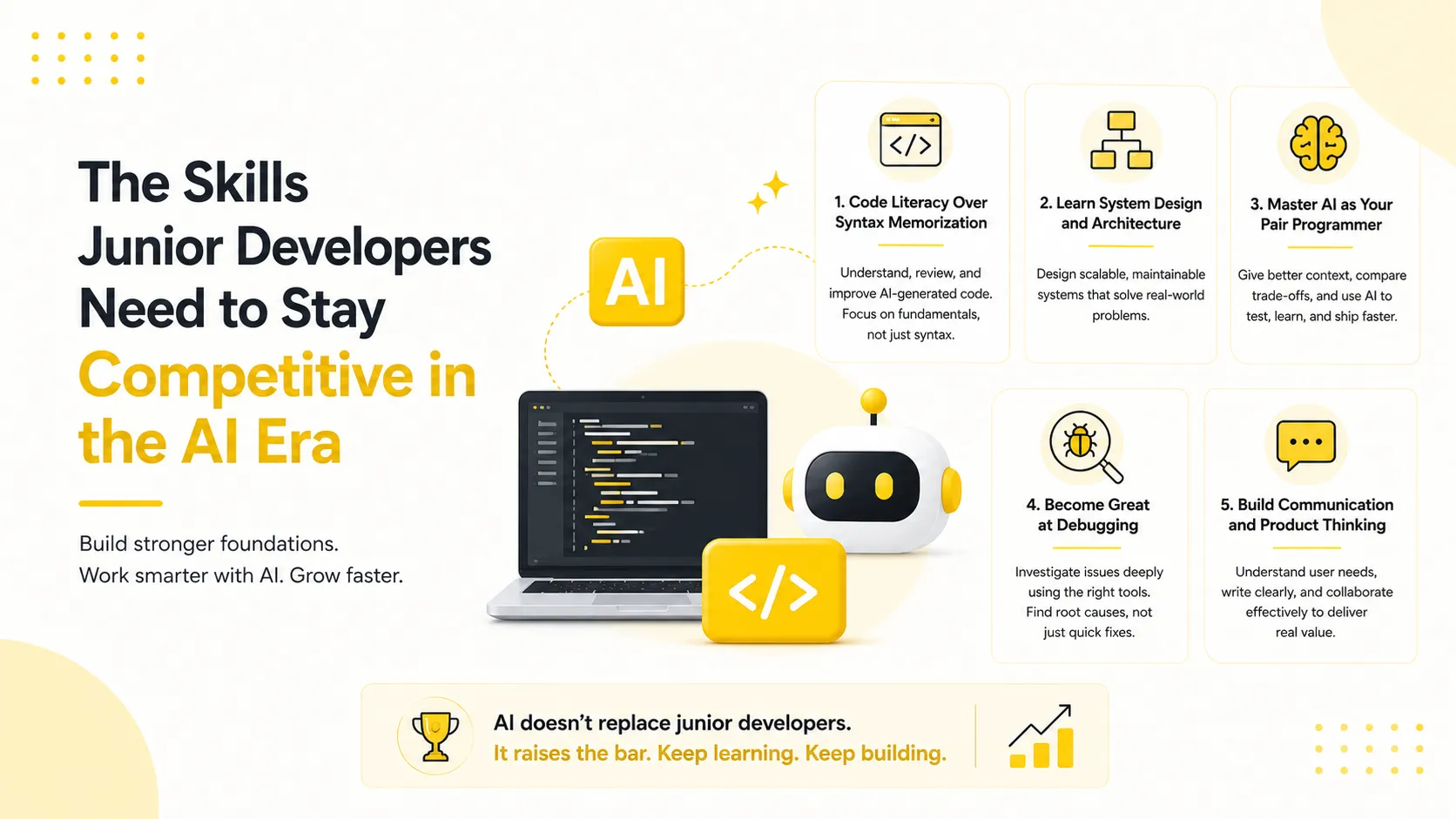
1. Code Literacy Over Syntax Memorization
AI can generate syntactically correct code in seconds, but understanding why that code works is what separates good developers from great ones.
Instead of memorizing APIs and syntax, focus on becoming someone who can review, validate, and improve AI-generated code.
Focus on Core Fundamentals
- Memory management
- Asynchronous programming
- State management
- Data structures
- Algorithms
- Networking fundamentals
Review Every AI Suggestion
Treat AI-generated code like a pull request from a very fast—but sometimes careless—developer. Always review edge cases, security implications, maintainability, and performance before accepting suggestions.
2. Learn System Design and Architecture
AI excels at generating individual functions, but it struggles with designing complete systems that remain maintainable and scalable over time.
Start learning:
- Application architecture
- REST APIs
- Authentication & Authorization
- Database design
- Caching strategies
- Scalability patterns
- Microservices
Thinking beyond individual files will accelerate your growth toward senior engineering responsibilities.
3. Master AI as Your Pair Programmer
The developers who benefit most from AI don't blindly copy its answers—they collaborate with it.
Provide Context
Instead of asking vague questions, include environment details, error messages, stack traces, expected behavior, constraints, and relevant code.
Ask for Trade-offs
Rather than requesting one solution, ask AI to compare multiple approaches and explain the pros, cons, scalability, memory usage, and maintainability of each.
Use AI for Testing
- Unit tests
- Integration tests
- Edge cases
- Negative test scenarios
- Performance testing ideas
Use AI to speed up testing while validating every generated result yourself.
4. Become Great at Debugging
Production issues rarely resemble textbook examples. Real-world software fails because of race conditions, network latency, environment differences, third-party services, database locks, and unexpected edge cases.
Learn to use:
- Browser DevTools
- Breakpoints
- Logging frameworks
- Stack traces
- Memory profilers
- Performance analyzers
Before asking AI for help, spend time investigating problems independently. Understanding the root cause develops stronger engineering instincts.
5. Build Communication and Product Thinking
Software engineering isn't just about writing code—it's about solving business problems.
Developers who communicate clearly, understand user needs, and collaborate effectively consistently outperform developers with stronger coding skills but weaker communication.
Improve Business Understanding
Instead of simply implementing tickets, understand why features exist and how they create value for users.
Write Better Documentation
- Pull request descriptions
- Technical documentation
- Design proposals
- Architecture decisions
Ask Better Questions
Research problems before asking for help. Well-structured questions demonstrate initiative and accelerate learning.
Conclusion
AI hasn't replaced junior developers—it has changed what companies expect from them.
The developers who thrive are those who combine strong programming fundamentals with architectural thinking, debugging skills, effective communication, and the ability to collaborate with AI tools.
Instead of competing against AI, learn to work alongside it. Developers who can leverage AI while applying sound engineering judgment will remain valuable throughout their careers.