Introduction
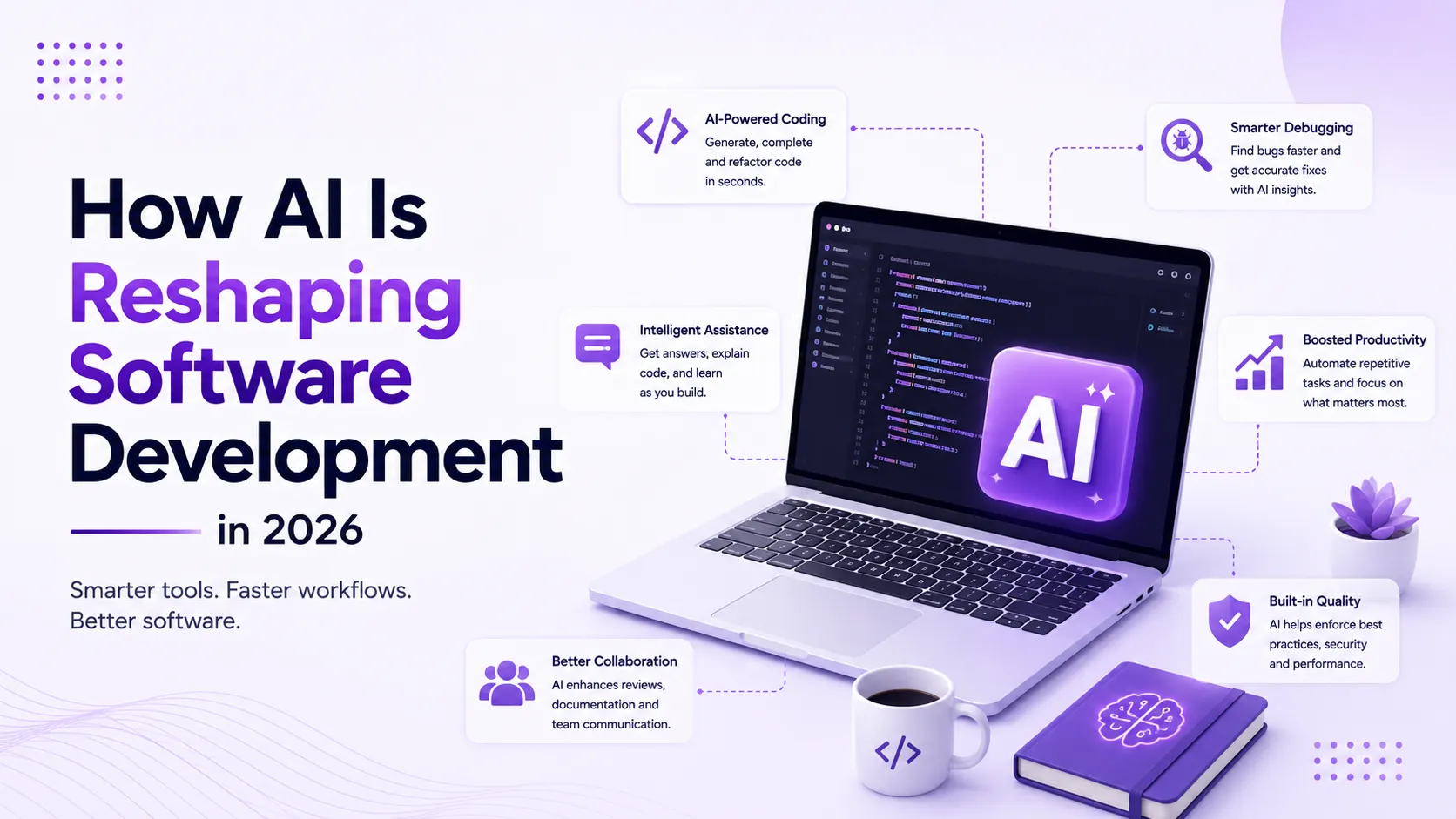
Artificial Intelligence has become an essential part of modern software development. Whether you're generating boilerplate code with GitHub Copilot, debugging APIs using ChatGPT, reviewing pull requests with Claude Code, or building complete features in Cursor, AI is changing how developers write software.
Yet many engineers experience inconsistent results. Sometimes AI produces elegant, production-ready code. Other times it generates outdated APIs, buggy implementations, unnecessary complexity, or solutions that don't fit the project at all.
The difference often isn't the AI model—it's the prompt.
Prompt engineering isn't about discovering magical keywords or memorizing secret phrases. It's about communicating with AI the same way you'd communicate with an experienced teammate: providing context, defining expectations, sharing constraints, and asking focused questions.
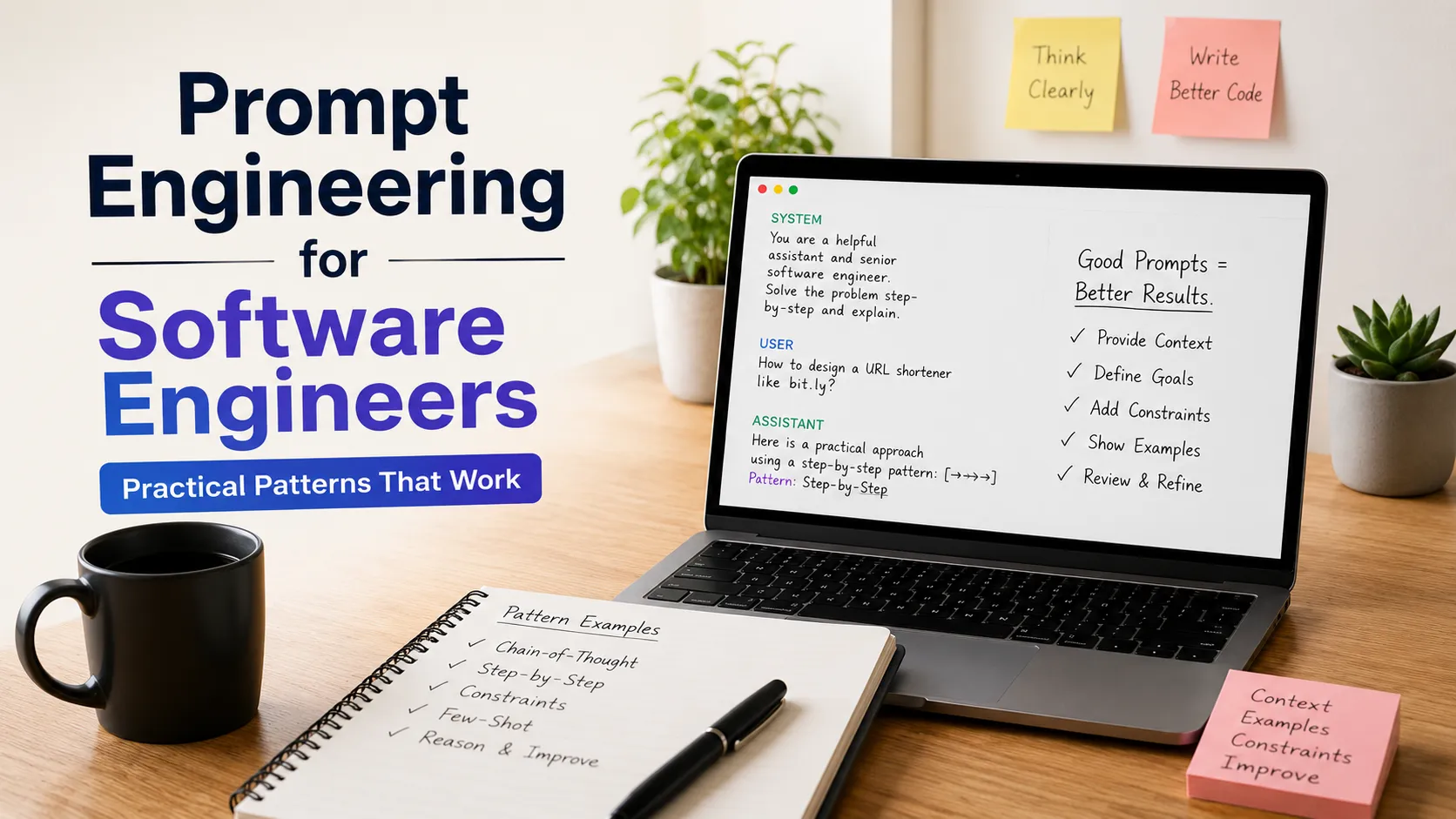
This guide explores practical prompting patterns that software engineers can use to write better code, debug faster, review architecture, generate documentation, and collaborate more effectively with AI.
Why Prompt Engineering Matters
Many developers write prompts like:
Build a login screen.
AI has to guess:
- Programming language
- Framework
- Architecture
- Authentication method
- State management
- UI design
- Backend
- Validation rules
With so many unknowns, the response is usually generic and requires significant rework.
Compare that with:
Build a Flutter login screen using GetX state management, Material 3, Firebase Authentication, responsive layouts, email/password validation, loading indicators, and proper error handling.
The second prompt gives AI enough context to generate a solution that's far more relevant.
The quality of the output depends heavily on the quality of the input.
Think of AI as a Junior Developer
One of the biggest mistakes developers make is treating AI like a search engine.
A better mindset is to treat it like a new engineer joining your team.
Instead of saying:
Build notifications.
You would normally explain:
- The project
- The framework
- The architecture
- Coding standards
- Expected behavior
- Edge cases
- Testing requirements
AI performs significantly better when given the same level of clarity.
Pattern 1: Provide Context Before Asking Questions
Weak Prompt
Fix this bug.
Better Prompt
I'm building a Flutter application using GetX. The app uses Firebase Authentication. Login works on Android but fails on iOS with a PlatformException. Here's the relevant code, expected behavior, and actual behavior.
Useful context includes:
- Programming language
- Framework
- Architecture
- Package versions
- Platform
- Expected behavior
- Current behavior
- Project constraints
Pattern 2: Define AI's Role
Assigning a role changes how AI approaches the problem.
Examples:
- Act as a Senior Flutter Developer.
- Act as a Backend Architect.
- Act as a Security Reviewer.
- Act as a Database Performance Expert.
- Act as an Android Build Engineer.
This produces more focused and relevant responses.
Pattern 3: Describe the Goal, Not Just the Task
Instead of:
Write pagination.
Try:
Implement infinite scrolling pagination that minimizes API calls, prevents duplicate requests, handles loading and error states, and follows Clean Architecture.
Explaining the desired outcome helps AI optimize its implementation.
Pattern 4: Specify Constraints Explicitly
AI cannot infer project-specific limitations.
Example:
- Flutter 3.32
- GetX state management
- No third-party state libraries
- Material 3
- Dark mode support
- Production-ready code
Constraints reduce irrelevant suggestions and incompatible dependencies.
Pattern 5: Ask for One Thing at a Time
Avoid combining multiple unrelated tasks into a single prompt.
Instead of requesting login UI, Firebase integration, navigation, tests, documentation, and optimization together, break them into smaller prompts.
Smaller requests consistently produce more reliable outputs.
Pattern 6: Include Existing Code
AI performs much better when it understands your current implementation.
Share relevant files such as:
- Repository
- Model
- Service
- Controller
Then ask AI to identify bugs, architecture issues, performance concerns, and maintainability improvements without rewriting everything.
Pattern 7: Request Explanations Before Rewrites
Rather than immediately replacing your implementation, ask AI:
- Why is this solution better?
- What problem does it solve?
- Which design principles are being applied?
Understanding the reasoning helps you become a stronger engineer.
Pattern 8: Ask AI to Review Like a Pull Request
Instead of asking:
Is my code good?
Ask:
Review this code as if it were a pull request.
Focus the review on:
- Architecture
- Readability
- Maintainability
- Performance
- Security
- Edge cases
- Testing
Pattern 9: Generate Edge Cases
AI is excellent at identifying situations developers often overlook.
Example prompts:
List 20 edge cases for a payment screen.
Generate failure scenarios for an image upload feature.
Typical suggestions include network failures, duplicate requests, expired authentication, invalid file formats, storage limitations, and server timeouts.
Pattern 10: Ask AI to Critique Its Own Solution
After AI generates code, ask it to review its own work.
Prompt:
Review your solution and identify hidden bugs, scalability concerns, security risks, performance bottlenecks, and maintainability issues.
This often uncovers weaknesses that weren't mentioned initially.
Pattern 11: Optimize Instead of Regenerate
Rather than asking AI to rewrite an entire file, ask it to optimize the existing implementation while preserving functionality.
Focus on:
- Performance
- Memory usage
- Readability
- Maintainability
Incremental improvements are generally safer than complete rewrites.
Pattern 12: Generate Tests Alongside Code
Whenever AI generates functionality, immediately request accompanying tests.
Include:
- Success cases
- Failure scenarios
- Edge cases
- Invalid inputs
- Mock dependencies
This increases confidence in AI-generated implementations.
Pattern 13: Use AI for Documentation
AI can quickly generate:
- README files
- API documentation
- Architecture overviews
- Setup guides
- Release notes
- Code comments
Providing source code alongside your request improves documentation quality.
Pattern 14: Debug with Complete Information
Instead of saying:
App crashes.
Include:
- Error message
- Stack trace
- Relevant code
- Flutter version
- Package versions
- Platform
- Steps to reproduce
- Expected behavior
The more context AI receives, the better the debugging assistance becomes.
Pattern 15: Refine Through Conversation
Prompt engineering is an iterative process.
A productive workflow looks like this:
- Generate a basic implementation.
- Improve error handling.
- Add loading states.
- Optimize performance.
- Review architecture.
- Generate tests.
- Improve accessibility.
- Create documentation.
This mirrors how real software evolves.
Common Prompting Mistakes
- Combining multiple unrelated tasks.
- Providing insufficient project context.
- Assuming AI understands your architecture.
- Requesting unnecessary rewrites.
- Accepting generated code without review.
- Ignoring testing and edge cases.
- Providing incomplete error messages.
- Omitting framework or package versions.
A Reusable Prompt Template
Use this structure for consistently better results:
Role
Act as a Senior Flutter Developer.
Context
I'm building a Flutter 3.32 application using GetX and Clean Architecture.
Task
Implement infinite scrolling pagination for a product list.
Requirements
- Avoid duplicate API calls
- Handle loading and error states
- Support pull-to-refresh
- Use the existing repository pattern
- Follow null safety
- Keep the code production-ready
Expected Output
Provide the implementation, explain key design decisions, and highlight potential edge cases.
Best Practices
- Always provide project context.
- Break complex work into smaller prompts.
- Specify technologies and versions.
- Ask for explanations instead of only code.
- Review AI output like a pull request.
- Verify recommendations using official documentation.
- Test every generated implementation.
- Use AI to augment—not replace—engineering judgment.
Conclusion
Prompt engineering has become a core skill for modern software engineers. The quality of AI-generated code depends not only on the capabilities of the model but also on the clarity and structure of the instructions it receives.
By treating AI as a collaborative teammate, providing rich context, defining constraints, and refining requests iteratively, developers can consistently generate more accurate, maintainable, and production-ready solutions.
The best engineers don't rely on AI to think for them—they use it to automate repetitive work, validate ideas, explore alternatives, and accelerate development while continuing to apply human judgment where it matters most.
Ultimately, prompt engineering is simply effective communication. The clearer you describe the problem, the better the solution AI can provide.