Introduction
Building a software product used to be a team effort.
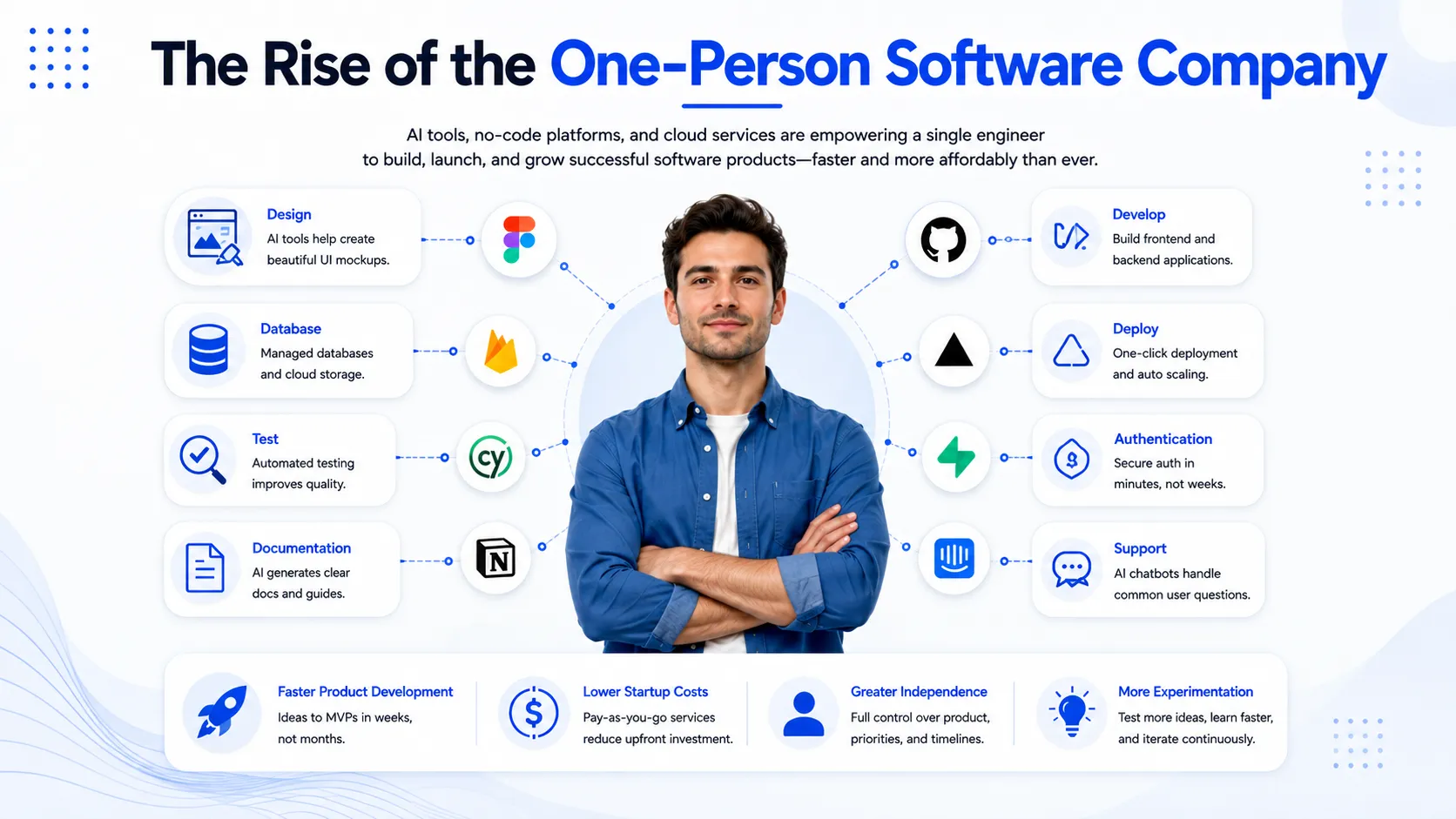
A designer created the user interface. Frontend and backend developers built the application. QA engineers tested every feature. Technical writers prepared documentation, while customer support handled user issues after launch.
For most startups, assembling this team required significant time and investment before a product could even reach its first users.
Today, that equation is changing.
With AI-powered tools, no-code platforms, cloud services, and automated workflows, a single engineer can now build and launch products that would have required multiple specialists just a few years ago.
This doesn’t mean every role has disappeared. It means one person can now perform many of those responsibilities more efficiently than ever before.
Technology Is Multiplying Individual Productivity
Modern software development is no longer limited by how quickly someone can write code.
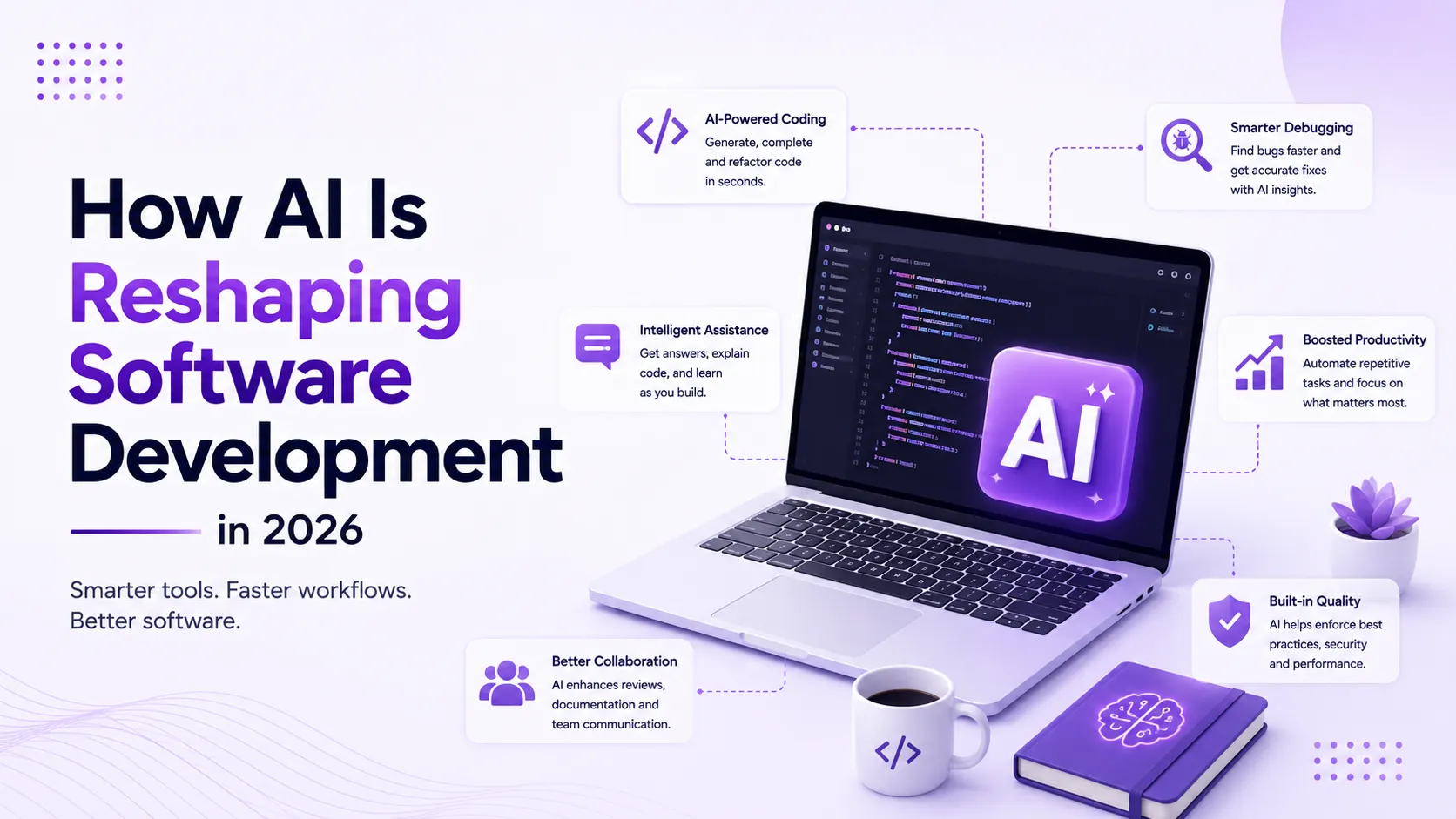
AI coding assistants can generate boilerplate code, explain unfamiliar libraries, and help debug issues. Design tools can create UI layouts in minutes. Cloud platforms provide authentication, databases, storage, and deployment without requiring developers to manage servers.
Instead of building everything from scratch, developers can assemble reliable services and focus on solving the actual problem.
As a result, one engineer can accomplish far more than was possible just a few years ago.
One Person, Many Roles
Today’s solo founder often wears multiple hats throughout the product lifecycle.
They may use AI to create UI mockups instead of hiring a designer, build both the frontend and backend using modern frameworks, rely on automated testing tools to improve quality, generate documentation with AI, and use chatbots to answer common customer questions.
While none of these tools fully replace specialists, they significantly reduce the amount of work required to launch a high-quality product.
The Biggest Opportunities
Faster Product Development
Ideas can be validated in weeks instead of months.
Developers can build MVPs quickly, gather user feedback, and iterate without waiting for large teams.
Lower Startup Costs
Many essential services are now available on a pay-as-you-go basis.
This reduces the upfront investment needed to launch a software business and allows founders to scale expenses alongside their users.
Greater Independence
Solo founders have complete control over product decisions, priorities, and timelines without the overhead of coordinating a large engineering team.
More Experimentation
Because building software is faster and less expensive, developers can test multiple ideas before committing significant time and resources to a single product.
The Limitations
Despite these advances, building a successful software company alone isn’t easy.
As the product grows, challenges begin to shift from development to operations.
A solo founder is still responsible for:
- Product strategy
- Security
- Performance
- Marketing
- Sales
- Customer support
- Legal and compliance
- Financial planning
AI can assist with many of these tasks, but it cannot make business decisions or build lasting customer relationships.
Scaling a product often requires expertise beyond software development.
Success Still Depends on Solving Real Problems
One of the biggest misconceptions is that faster development automatically leads to successful products.
It doesn’t.
Thousands of applications can now be built in a matter of days, but users only adopt products that solve genuine problems.
The competitive advantage is no longer just the ability to build software quickly — it’s the ability to understand users, identify market needs, and continuously improve the product.
The Future of Entrepreneurship
The barrier to starting a software company has never been lower.
A single engineer with the right tools can build products, reach customers, process payments, deploy globally, and manage infrastructure with minimal overhead.
This doesn’t mean large engineering teams will disappear. Complex products will always benefit from specialists in design, engineering, security, and operations.
However, it does mean that the journey from idea to business is becoming accessible to more people than ever before.
Conclusion
The rise of the one-person software company isn’t about replacing teams — it’s about empowering individuals.
AI and modern development platforms have dramatically increased what a single engineer can accomplish. Tasks that once required designers, developers, testers, technical writers, and support teams can now be completed with the help of intelligent tools and cloud services.
The biggest challenge is no longer building software.
It’s building something that people genuinely want to use.
In the years ahead, the most successful solo founders won’t simply be the fastest builders.
They’ll be the ones who combine technical skills with product thinking, customer understanding, and sound business decisions to turn ideas into sustainable companies.