Introduction
Not long ago, software engineering was measured by how much code you could write.
A productive developer was someone who could implement features quickly, fix bugs efficiently, and navigate large codebases with confidence. Writing thousands of lines of code every week was often seen as a sign of productivity.
Today, that definition is changing.
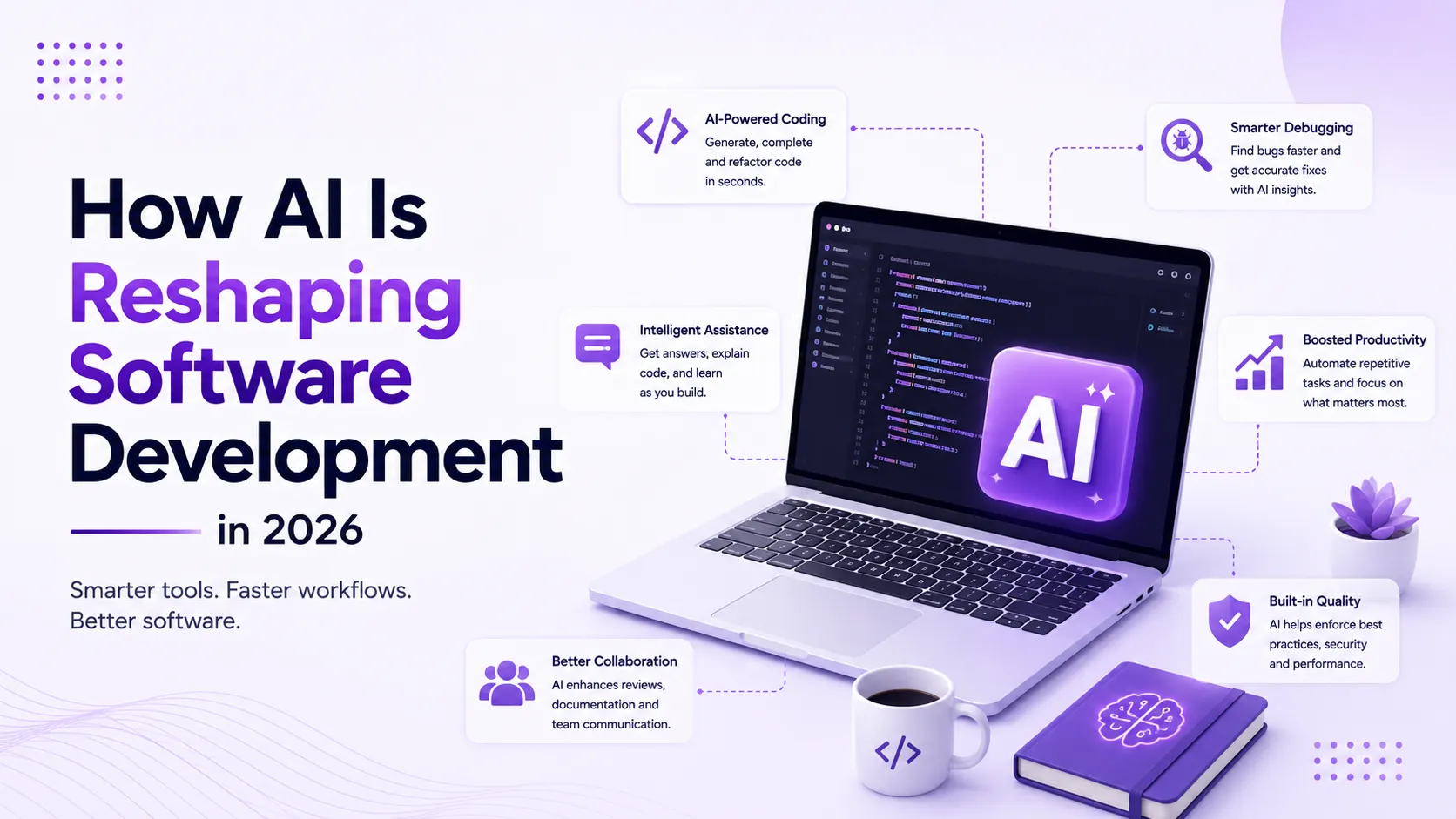
Modern AI coding assistants can generate functions, build APIs, write unit tests, explain unfamiliar code, and even refactor entire modules in seconds. Tasks that once took hours can now be completed with a well-written prompt and a few minutes of review.
This doesn’t mean software engineers are becoming obsolete. It means their role is evolving.
The most valuable engineers in 2026 aren’t necessarily the ones typing the most code. They’re the ones making the right technical decisions, validating AI-generated solutions, and ensuring software is reliable, secure, and aligned with business goals.
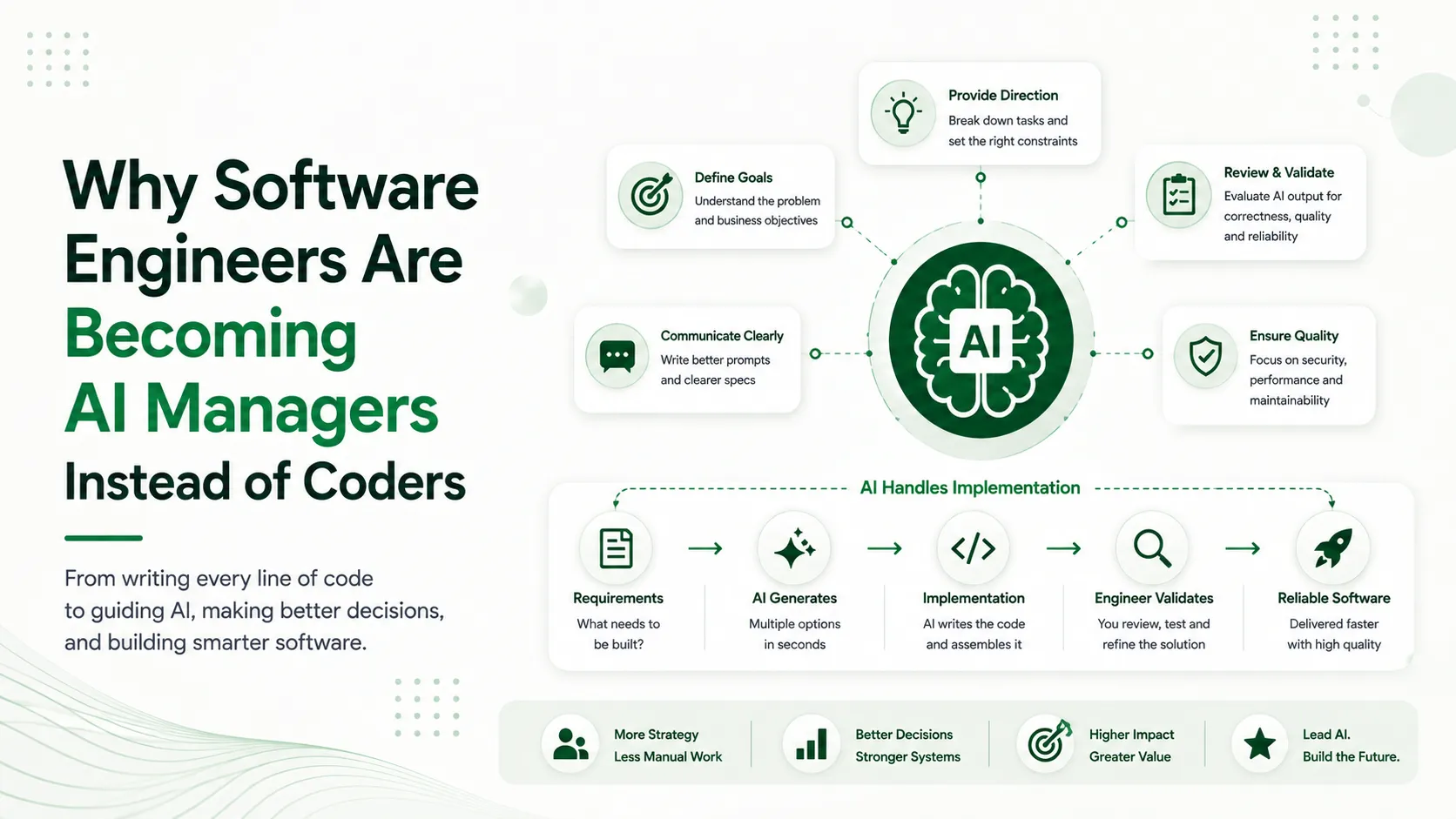
In many ways, software engineers are becoming AI managers — professionals who direct, supervise, and improve AI rather than simply writing every line themselves.
The Shift from Implementation to Supervision
For decades, software development followed a familiar workflow.
A product manager gathered requirements.
A designer created the user interface.
Developers translated those designs into code.
QA engineers tested the application before release.
Today, AI has changed one critical part of that workflow: implementation.
Instead of starting with an empty file, developers increasingly begin with AI-generated code. The first draft often appears in seconds, allowing engineers to focus less on typing and more on evaluating whether the solution is actually correct.
This changes the engineer’s responsibility.
How do I write this function?
Engineers now ask:
Is this the right solution for the problem?
That distinction is transforming the profession.
Coding Is No Longer the Bottleneck
Writing code has become significantly faster.
Understanding the problem has not.
Consider a typical feature request:
Add role-based access control to our application.
Generating middleware or authentication logic is relatively easy with modern AI tools.
The difficult questions remain entirely human:
- Which roles should exist?
- What permissions should each role have?
- How should existing users be migrated?
- What happens if permissions change later?
- How will this affect security and compliance?
AI can generate the implementation.
Engineers still define the system.
Engineers Are Becoming Decision-Makers
The modern software engineer spends more time making decisions than writing syntax.
Instead of manually implementing every feature, developers now evaluate options, compare trade-offs, and guide AI toward the right outcome.
Some of today’s highest-value responsibilities include:
- Designing scalable architectures
- Breaking large problems into manageable tasks
- Reviewing AI-generated solutions
- Identifying performance bottlenecks
- Preventing security vulnerabilities
- Ensuring long-term maintainability
These activities have always existed.
The difference is that they now occupy a much larger percentage of an engineer’s day.
Code Review Is More Important Than Ever
One of the biggest misconceptions about AI-generated code is that it can simply be copied into production.
Experienced engineers know better.
AI can produce code that looks convincing while containing subtle issues such as:
- Incorrect business logic
- Hidden security vulnerabilities
- Performance inefficiencies
- Unhandled edge cases
- Outdated library usage
- Poor error handling
Because of this, reviewing AI-generated code has become one of the most valuable engineering skills.
The goal isn’t to verify that the code compiles.
The goal is to verify that it solves the right problem safely and efficiently.
Software Architecture Is Becoming a Competitive Advantage
AI is remarkably good at implementing isolated pieces of functionality.
It is much less reliable at designing entire systems.
Architecture requires understanding:
- Business objectives
- Future scalability
- Team workflows
- Operational costs
- Security requirements
- Long-term maintenance
These decisions rarely have one correct answer.
They involve trade-offs that depend on context, priorities, and experience.
This is where senior engineers provide the greatest value.
Rather than competing with AI on speed, they guide AI with architectural direction.
Writing Better Specifications Is Becoming a Core Engineering Skill
AI performs best when given clear instructions.
A vague requirement often produces a vague solution.
For example:
Build a payment system.
This leaves countless unanswered questions.
Compare it with:
Implement a payment service that supports credit cards and digital wallets, retries failed transactions twice, logs every payment event, encrypts sensitive data, and returns descriptive errors for declined payments.
The second instruction gives AI enough context to generate something much closer to production quality.
As AI becomes more capable, the ability to define problems clearly becomes increasingly valuable.
Engineers who communicate effectively consistently produce better software.
Security Can No Longer Be an Afterthought
AI can generate authentication flows, database queries, and API endpoints within seconds.
Unfortunately, it can also introduce vulnerabilities just as quickly.
Examples include:
- SQL injection risks
- Missing authorization checks
- Insecure API endpoints
- Weak input validation
- Sensitive information exposed in logs
- Unsafe dependency choices
Security isn’t something AI automatically guarantees.
It remains the engineer’s responsibility.
Organizations increasingly expect developers to treat security as a continuous part of software development rather than a final review before deployment.
Reliability Is a Human Responsibility
A feature isn’t complete simply because it works during a demo.
Reliable software continues working under:
- High traffic
- Network failures
- Unexpected user behavior
- Third-party service outages
- Invalid inputs
- Production-scale workloads
AI rarely understands the full operational environment of an application.
Engineers must think beyond the “happy path.â€
They design monitoring, retries, fallback mechanisms, rate limiting, logging, and recovery strategies that keep software dependable in real-world conditions.
Productivity Is Being Measured Differently
For years, engineering productivity was often associated with:
- Lines of code written
- Number of completed tickets
- Hours spent coding
These metrics have never perfectly represented value, and AI has made them even less meaningful.
Today, productive engineers are those who:
- Deliver reliable solutions
- Make sound technical decisions
- Prevent future problems
- Improve developer workflows
- Help teammates succeed
- Reduce unnecessary complexity
The impact of an engineer is increasingly measured by outcomes rather than output.
Collaboration with AI Is Becoming a Professional Skill
Using AI effectively isn’t simply about writing better prompts.
It involves an iterative process:
- Providing clear context
- Evaluating generated solutions
- Refining requirements
- Testing assumptions
- Correcting mistakes
- Knowing when to reject AI suggestions
The engineer remains responsible for the final product.
AI accelerates development, but it does not replace professional judgment.
The strongest engineers know when to trust AI and when to rely on their own expertise.
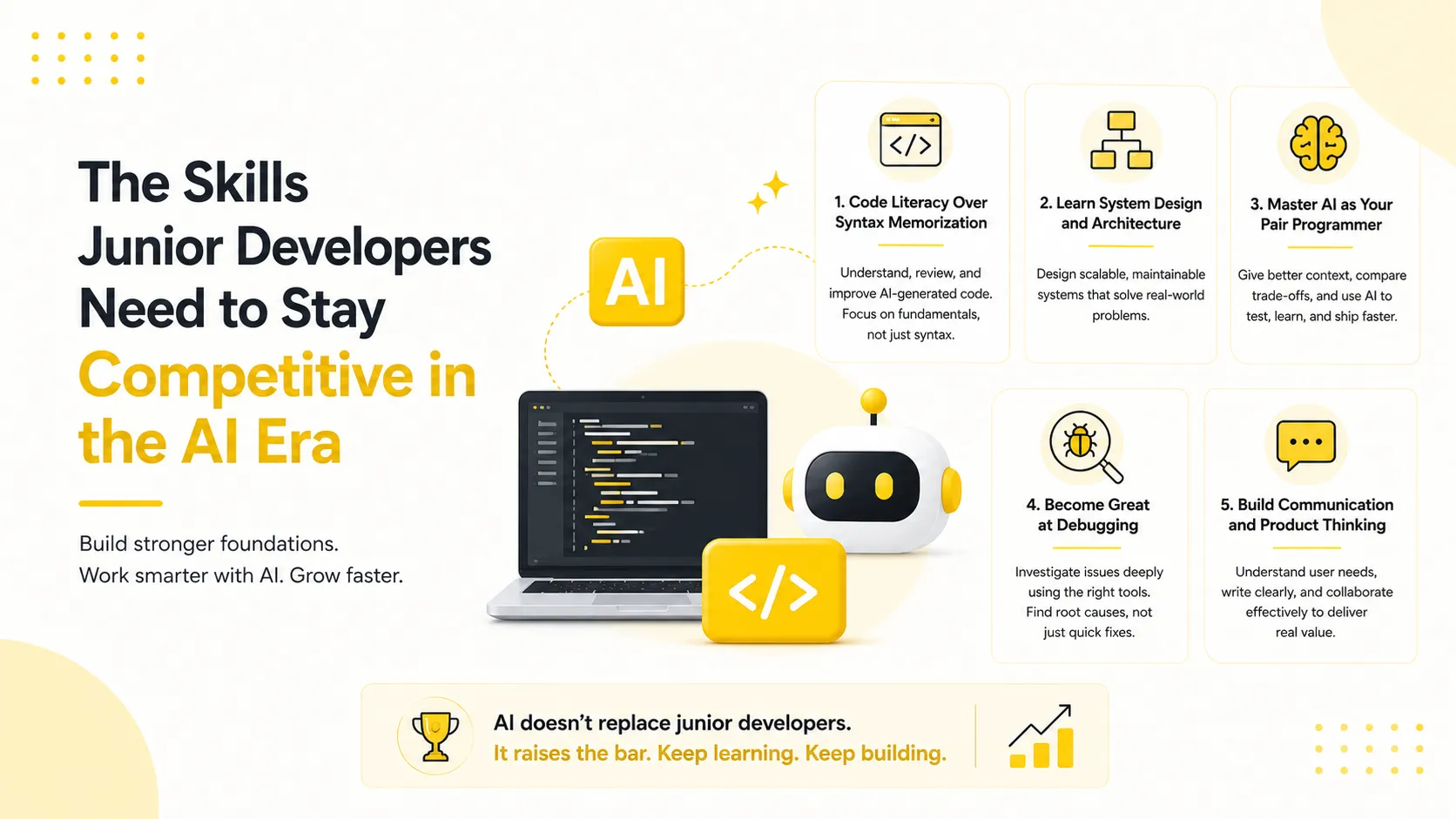
What Skills Will Matter Most?
As implementation becomes faster, other engineering skills become increasingly valuable.
Developers who invest in the following areas will remain highly competitive.
Systems Thinking
Understanding how different components interact across an entire application.
Architecture
Designing software that scales and remains maintainable over time.
Communication
Writing clear documentation, specifications, and technical proposals.
Critical Thinking
Questioning assumptions instead of accepting the first generated answer.
Security Awareness
Identifying vulnerabilities before software reaches production.
Business Understanding
Connecting technical decisions to customer and organizational goals.
These skills are difficult to automate because they depend on judgment, context, and experience.
Does This Mean Coding No Longer Matters?
Absolutely not.
Understanding how software works is still essential.
Engineers who don’t understand programming fundamentals will struggle to recognize when AI produces incorrect or inefficient code.
Coding remains the foundation of software engineering.
The difference is that writing every line manually is no longer where engineers create the most value.
The ability to review, improve, and strategically guide software development has become equally important.
Looking Ahead
Over the next few years, AI coding assistants will become faster, more capable, and more deeply integrated into development workflows.
Routine implementation will continue to accelerate.
The demand for thoughtful engineering, however, is unlikely to diminish.
Software projects will still require people who can balance technical trade-offs, understand business needs, ensure security, and build systems that remain reliable as they grow.
The role of the software engineer is not disappearing.
It is expanding.
The engineers who thrive won’t be the ones competing with AI to write code faster. They’ll be the ones who know how to direct AI effectively, evaluate its work critically, and deliver software that solves real problems.
In the age of intelligent development tools, success is no longer defined by how many lines of code you write.
It’s defined by how well you guide the technology that writes them.
Final Thoughts
Artificial intelligence has transformed software development, but it hasn’t eliminated the need for skilled engineers. Instead, it has shifted where expertise matters most.
Writing code is becoming easier. Making the right engineering decisions is becoming harder — and more valuable.
The future belongs to engineers who combine technical knowledge with architectural thinking, communication, and sound judgment. In many organizations, the role is already evolving from coder to coordinator, from implementer to reviewer, and from individual contributor to AI-enabled problem solver.
The next generation of great software engineers won’t succeed because they write the most code.
They’ll succeed because they know what should be built, why it should be built, and how to ensure AI builds it correctly.